
How to size a dosing tank — calculation and chart
Short answer: The tank should hold enough solution for 7 to 15 days — no more. For small RO plants a 10 or 15 litre LLDPE vessel is sufficient. The problem with an oversized tank is that the solution ages and bacteria can develop in it.
The sizing formula
Then add 20 percent freeboard.
Example: 120 ml/hr dosing, 10 days of solution required:
120 × 24 × 10 ÷ 1,000 = 28.8 litres, plus 20 percent = around 35 litres
But if you make the solution more concentrated, the ml/hr falls and a smaller tank will do. That is why tank size and solution strength are decided together.
Practical chart for RO plants
| Plant | Antiscalant/day | Solution | Tank | Lasts |
|---|---|---|---|---|
| 250 LPH | ~37 g | 5% | 10 L | ~13 days |
| 500 LPH | ~74 g | 5% | 15 L | ~10 days |
| 1,000 LPH | ~148 g | 5% | 15 L | ~5 days |
| 1,000 LPH | ~148 g | 10% | 15 L | ~10 days |
| 2,000 LPH | ~295 g | 10% | 30 L | ~10 days |
| 5,000 LPH | ~740 g | 10% | 50 L | ~7 days |
Notice that on the 1,000 LPH plant, moving from a 5 percent to a 10 percent solution doubles how long the same tank lasts. That is the simplest way to keep the tank small.
LLDPE vessels available
| Size | Suited to | Price |
|---|---|---|
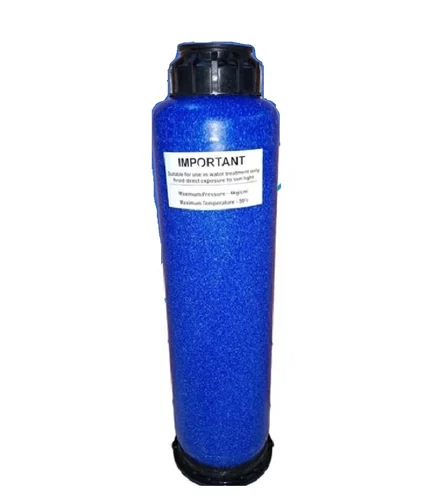
| LLDPE Vessel 10 litre | 250–500 LPH RO | ₹2,835 |
| LLDPE Vessel 15 litre | 500–2,000 LPH RO | ₹3,465 |
For larger tanks please ask us — we can arrange the right size for your plant.
Why LLDPE
- Chemically resistant — antiscalant, hypo and alkali are all fine
- Moulded in one piece — no joints, so no leaks
- UV stabilised — does not degrade in sunlight
- Light and economical — and unlike an MS tank it cannot rust
Five rules for installing the tank
- Mount it above the pump so chemical feeds by gravity — this eliminates most priming problems and is the single most important rule.
- Keep it covered — dust, insects and sunlight all degrade the solution. Algae grows in an open tank.
- Make the level visible — a translucent tank or a marked scale on the outside. If you can see the level, you notice before it runs out.
- Fit a level switch — ₹1,050 protects both the pump and the membrane. Full details in our level switch guide.
- Mix properly — powder antiscalant settles at the bottom if not dissolved fully, which makes dosing inaccurate.
How long solution stays usable
| Chemical | Solution life |
|---|---|
| Antiscalant | 15 – 20 days |
| Sodium hypochlorite | 7 – 10 days (loses strength quickly) |
| SMBS | 7 – 10 days |
| Caustic / acid | Longer, but check the tank material |
So when sizing the tank, take the chemical life into account too. There is no point making a 30 day tank of hypo when it loses strength within 10.
A common mistake — oversizing
People assume a bigger tank means less work. In fact:
- Old solution loses strength — dosing continues but has little effect
- Bacteria can develop, which are themselves harmful to the membrane
- Sediment collects at the bottom and ends up choking the suction valve
The right approach is a smaller tank refilled more often with fresh solution. It is slightly more work but much better for the plant.
Let us size your dosing tank
Send your plant capacity and chemical — we will confirm the tank size, solution strength and how long it will last.
💬 WhatsApp par poochhein 📞 9910646957Frequently asked questions
What size dosing tank should I use?
One that holds enough solution for seven to fifteen days. For small RO plants a ten or fifteen litre LLDPE vessel is usually adequate. A larger tank means the solution sits too long and loses strength.
Should the tank be mounted above the pump?
Yes, this is the best arrangement. Chemical then feeds to the pump by gravity and priming problems largely disappear. It should be done on every new installation.
How long does an antiscalant solution last?
Fifteen to twenty days. Beyond that bacteria can develop in it, which are themselves harmful to the membrane. Sodium hypochlorite solution loses strength even faster, within seven to ten days.
Can I use an ordinary plastic drum as a dosing tank?
You should use an LLDPE vessel, which is made for chemical service and moulded in one piece so it does not leak. An old paint bucket or food container can be attacked by the chemical and may also react with it.
What should I watch when making up the solution?
Dissolve powder chemicals fully, otherwise they settle at the bottom and dosing becomes inaccurate. Keep the tank covered to protect the solution from dust and sunlight, and rinse the tank before each new batch.