
FRP vs MS vessel — which should you choose
Short answer: FRP is the better choice for almost all water treatment work — it does not rust, it is light, and it needs no lining maintenance. MS (mild steel) is only preferable where pressure or temperature is beyond what FRP can handle, or where a very large custom vessel is required.
The most common problem with an MS vessel is that the internal lining fails and the vessel begins to rust from inside, contaminating the water.
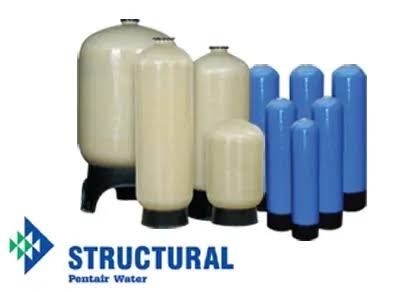
Comparison
| Feature | FRP | MS (mild steel) |
|---|---|---|
| Corrosion | Does not rust at all | Rusts if the lining fails |
| Service life | 10 – 15 years | 5 – 10 years (lining dependent) |
| Weight | Light | Heavy |
| Maintenance | Essentially none | Lining inspection and repair |
| Pressure rating | Up to ~10 kg/cm² | Can be built to any rating |
| Temperature | Up to ~50°C | Higher |
| Custom sizes | Standard sizes only | Any size can be fabricated |
| Installation | Easy, one person can handle small sizes | Needs lifting equipment |
Why FRP is normally better
1. No rust, ever
This is the decisive advantage. An MS vessel depends entirely on its internal lining. Once that lining develops a crack or a pinhole, water reaches the steel and rust begins — and it spreads unseen inside a closed vessel.
2. Rust contaminates the water
Once a vessel starts rusting internally, iron enters your treated water. It shows up as orange staining on the downstream cartridge filter, and it fouls RO membranes.
3. Light and easy to handle
An FRP vessel can often be positioned by hand, whereas an MS vessel of the same size needs lifting equipment and a stronger foundation.
4. No lining maintenance
MS vessels need periodic internal inspection and lining repair. FRP needs none of this.
When MS is the better choice
- Pressure above 10 kg/cm² — beyond standard FRP ratings
- Temperature above 50°C — hot water service
- Very large custom sizes — beyond standard FRP diameters
- Special shapes — where a fabricated vessel is required
- Where mechanical damage is likely — heavy industrial areas
Cost over ten years
Take a mid-size softener vessel:
| FRP | MS | |
|---|---|---|
| Initial cost | Lower | Higher (fabrication plus lining) |
| Lining repair | None | Once or twice in ten years |
| Replacement in 10 years | Usually none | Possible |
| Water contamination risk | None | Present if lining fails |
| Installation cost | Low | Higher, lifting required |
Over ten years FRP is clearly cheaper, and the difference widens once you count the cost of a rust incident — contaminated water, a fouled membrane, and unplanned downtime.
Points to check when buying FRP
- Pressure rating — confirm it exceeds your working pressure with a margin
- The liner — good FRP vessels have a food-grade polyethylene inner liner
- Thread quality — the top opening thread should be clean and true
- Certification — for drinking water, the vessel should be suitable for potable use
- Brand — see our FRP vessel range
What damages an FRP vessel
FRP is durable but not indestructible:
- Over-pressure — exceeding the rating can cause bulging
- Vacuum — if a vessel drains without air entering, it can collapse inward. Always fit a vacuum breaker (₹210)
- Over-tightening the valve — cracks the top thread
- Prolonged sunlight — degrades the outer surface over years
- Impact — dropping or striking it
Signs of damage and what to do are covered in our vessel leakage and bulging guide.
The practical answer
For a softener, sand filter, carbon filter or DM vessel at normal pressure and temperature — choose FRP. It is what almost every plant uses today, and for good reason.
Consider MS only where the duty is genuinely outside FRP's limits, and then make sure the lining specification and inspection schedule are properly defined.
Choosing a vessel?
Send your application, flow, pressure and temperature, and we will recommend the right vessel with its valve and internals.
💬 WhatsApp par poochhein 📞 9910646957Frequently asked questions
Which is better, FRP or MS vessel?
For almost all water treatment work FRP is better because it does not rust, is light and needs no lining maintenance. MS is only preferable where pressure or temperature exceeds what FRP can handle, or where a large custom vessel is required.
What is the main problem with MS vessels?
The internal lining. Once it develops a crack or pinhole, water reaches the steel and rust starts spreading unseen inside the vessel. That iron then enters the treated water and can foul RO membranes.
How long does an FRP vessel last?
Typically ten to fifteen years in normal service. MS vessels last five to ten years depending on how well the lining is maintained.
When is an MS vessel the right choice?
Where pressure exceeds about ten kg per cm2, where the water is hotter than about fifty degrees, or where a very large or custom shaped vessel is needed that is not available in standard FRP sizes.
What can damage an FRP vessel?
Over-pressure can cause bulging, and a vacuum can collapse it inward if it drains without air entering, which is why a vacuum breaker should always be fitted. Over-tightening the valve cracks the top thread, and prolonged sunlight degrades the outer surface.