
Edose NEO vs NEO PRO vs MAX — which model for which plant
Short answer: NEO covers most RO plants. NEO PRO includes a level switch and is better where the tank cannot be watched daily. HP is for line pressures up to 10 kg/cm². MAX is the motorised series for large industrial duties above 25 LPH.
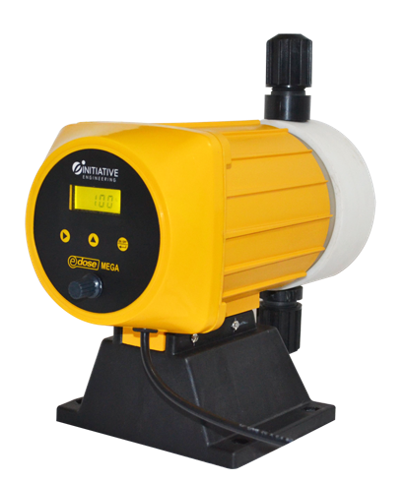
The range at a glance
| Series | Capacity | Pressure | Suited to | From |
|---|---|---|---|---|
| Basic Edose | 6–10 LPH | 4 kg/cm² | Small RO, tight budget | ₹5,460 |
| NEO | 6–10 LPH | 4 kg/cm² | The usual choice | ₹6,090 |
| NEO PRO | 6–10 LPH | 4 kg/cm² | With level switch | ₹14,700 |
| HP | 5–10 LPH | 10–15 kg/cm² | High pressure lines | ₹28,875 |
| MAX (motorised) | 25–400 LPH | 5 kg/cm² | Industrial, ETP/STP | ₹25,725 |
| NEUTRA / CHLORO | 10 LPH | 4 kg/cm² | Automatic dosing with sensor | ₹25,725 |
Basic Edose vs NEO — only ₹600 apart
The Basic Edose 6 LPH is ₹5,460 and the NEO 6 LPH is ₹6,090 — a difference of only ₹630. The NEO is better built and lasts longer.
Our advice: for that small a difference, take the NEO. Choose Basic only if the budget is genuinely very tight.
NEO vs NEO PRO — what you actually get
The main difference is the level switch, which is included on the NEO PRO. Its job is to stop the pump automatically when the tank empties.
| NEO 10 LPH | NEO PRO 10 LPH | |
|---|---|---|
| Price | ₹7,035 | ₹15,750 |
| Level switch | Separate, ₹1,050 | Included |
| Build | Standard | Heavier, industrial |
| Suited to | Where the plant is checked daily | Unmanned or remote plants |
MAX series — when it is needed
When dosing exceeds 25 LPH. These are motorised, meaning driven by a motor, and built for heavy continuous duty.
| Model | Capacity | Power | Price |
|---|---|---|---|
| MAX 25 | 25 LPH | Single phase | ₹25,725 |
| MAX 40 | 40 LPH | Single phase | ₹28,350 |
| MAX 50 | 50 LPH | 0.25HP, 3 phase | ₹38,325 |
| MAX 100 | 100 LPH | 0.25HP, 3 phase | ₹38,325 |
| MAX 200 | 200 LPH | 0.25HP, 3 phase | ₹41,475 |
| MAX 300 | 300 LPH | 0.5HP, 3 phase | ₹51,450 |
| MAX 400 | 400 LPH | 0.5HP, 3 phase | ₹51,450 |
Note that MAX 50 and MAX 100 are both ₹38,325 — so if there is any chance the requirement will grow, take the larger one.
NEUTRA and CHLORO — automatic dosing
These models include a sensor, so the pump adjusts its own dose. No manual setting is required.
- NEUTRA/CHLORO with pH/ORP sensor — ₹25,725, doses automatically on pH or chlorine
- CHLORO with FRC sensor — ₹70,350, doses on measured free residual chlorine
- DUAL 10 LPH — ₹51,450, two chemicals together
These are used for pH correction in ETP and for chlorine control in pools and water treatment, where the dose has to change constantly.
Which model for your plant
| Your setup | Suggested |
|---|---|
| 250–1,000 LPH RO, domestic or shop | NEO 6 LPH |
| 1,000–5,000 LPH RO, commercial | NEO 10 LPH plus level switch |
| Remote or unmanned plant | NEO PRO 10 LPH |
| Acid dosing | NEO 10 LPH PVDF |
| High pressure line | Edose HP |
| ETP/STP, larger flows | MAX 100 |
| Automatic pH or chlorine control | NEUTRA/CHLORO |
Optional extras
- Pulse input (₹1,680) — dose in proportion to a flow meter signal, so chemical follows water
- 4-20mA input (₹1,680) — dose on a signal from a sensor or panel
- Relay output with level switch (₹2,625) — alarm or panel signal when the tank empties
Pulse input is particularly useful — dosing then rises and falls automatically with plant flow. On plants where flow varies, it is well worth having.
Which Edose model suits you?
Tell us your plant capacity, the chemical and whether the plant is checked daily — we will recommend the right model.
💬 WhatsApp par poochhein 📞 9910646957Frequently asked questions
What is the difference between Edose NEO and NEO PRO?
The NEO PRO includes a level switch and has a heavier, more industrial build. On a NEO the level switch is fitted separately for around a thousand rupees. If you only want the switch, a NEO plus a separate switch works out considerably cheaper.
Which Edose model is most commonly used?
The NEO 6 LPH and NEO 10 LPH, because the dosing requirement of most RO plants falls within that range and the price is reasonable.
When is the MAX series needed?
When dosing exceeds twenty five LPH, such as in ETP, STP or large industrial plants. These are motorised and built for heavy continuous duty, which small solenoid pumps are not designed for.
What does pulse input do?
It lets the dosing pump run on a signal from a flow meter, so the chemical dose rises and falls with the water flow. On plants where flow varies this is very useful, because the setting does not have to be changed manually.
What are the NEUTRA and CHLORO models for?
They include a sensor that continuously measures pH or chlorine, and the pump adjusts its own dose accordingly. They are used for pH correction in ETP and for chlorine control in swimming pools and water treatment, where the required dose changes constantly.