
How to select a rotameter — sizing by flow range (LPH)
Short answer: There is really only one rule that matters — your normal running flow should fall in the middle of the rotameter scale, roughly between 40 and 70 percent. If your RO plant runs at 300 LPH, the right model is F500 (50–500 LPH), not F1200. After that you only need to check two things: the NB size of your pipe, and whether you need a totaliser or just a visual reading.
We have been supplying water treatment products from Faridabad since 2017, and the most common mistake we see with rotameters is that people select them by pipe size instead of flow. Below is the full method, the actual range chart, and the mistakes that cost money.
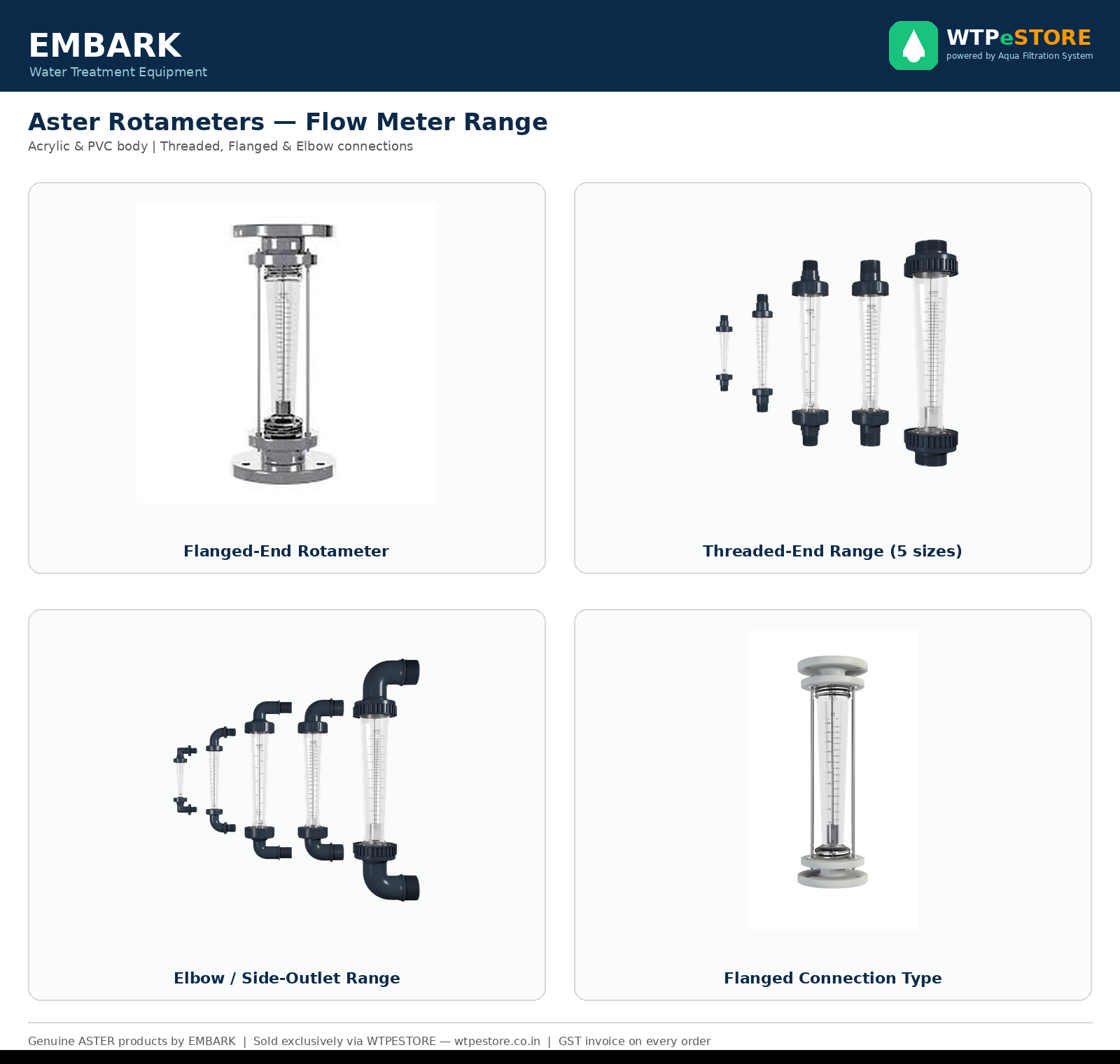
How a rotameter works
A rotameter is a vertical tapered tube with a float inside. Water enters from the bottom and pushes the float up. The higher the flow, the higher the float sits, and you read the flow in LPH directly off the scale printed on the tube. There is no power supply needed, which is why it is the cheapest and simplest way to measure flow.
This is also why it is called a variable area flow meter — the tube area increases as you go up, and the float settles where the upward force of the water balances its own weight.
Three steps to the right model
Step 1: Work out your normal flow in LPH
This is the flow your plant runs at every day, not the maximum. Two common ways to find it:
- RO permeate line: this is the rated capacity of the plant. A 500 LPH RO plant will read around 500 LPH on the permeate rotameter
- RO reject line: feed minus permeate. At 500 LPH output and 65 percent recovery, feed is about 770 LPH, so reject is around 270 LPH
- Feed or raw water line: use the pump capacity, or time how long a known tank takes to fill (a 100 litre tank filled in 6 minutes equals 1,000 LPH)
Step 2: Choose a model where your flow sits mid-scale
This is the step most people get wrong. Readings taken at the very bottom or very top of the scale are not reliable:
- Too low (under 20 percent): the float barely lifts, it is hard to read accurately, and the error is large
- Too high (over 90 percent): the float sits pinned at the top, so if flow increases further you have no way of knowing
Step 3: Match the NB size
NB stands for Nominal Bore — the pipe size. 15NB is roughly half an inch, 20NB three-quarter inch, 25NB one inch, and 40NB about one and a half inches. The rotameter NB should match your line, otherwise you need reducers, which disturb the flow and affect the reading.
Aster rotameter range chart
These are the Aster rotameters we normally keep in supply. Prices are exclusive of GST and change from time to time, so please confirm on WhatsApp before ordering.
| Model | Flow range (LPH) | I/O size | Price | Page |
|---|---|---|---|---|
| F100 | 10 – 100 | 15NB | ₹504 | View |
| F200 | 20 – 200 | 15NB | ₹504 | View |
| F500 | 50 – 500 | 15NB | ₹504 | View |
| F600sA | 100 – 600 | 15NB | ₹562 | View |
| F1200ES | 200 – 1,200 | 15NB | ₹578 | View |
| F1600ES | 300 – 1,600 | 15NB | ₹646 | View |
| F1200 | 200 – 1,200 | 20NB | ₹1,066 | View |
| F2400 | 200 – 2,400 | 20NB | ₹1,066 | View |
| F3000 | 300 – 3,000 | 20NB | ₹1,134 | View |
| F3600A | 300 – 3,600 | 20NB | ₹724 | View |
| F5000L | 500 – 5,000 | 25NB | ₹2,095 | View |
| F7500 | 500 – 7,500 | 40NB | ₹2,515 | View |
| F10000 | 2,000 – 10,000 | 40NB | ₹2,515 | View |
| F12000 | 3,000 – 12,000 | 40NB | ₹2,515 | View |
| F15000 | 3,000 – 15,000 | 40NB | ₹2,515 | View |
| F20000 | 2,000 – 20,000 | 50NB | ₹5,014 | View |
| F30000 | 3,000 – 30,000 | 50NB | ₹5,014 | View |
| F50000 | 10,000 – 50,000 | 65NB | ₹5,848 | View |
| F60000E | 10,000 – 60,000 | 65NB | ₹5,848 | View |
The complete list is here: view all Aster rotameters — over 25 models including flanged and special end-connection options.
Which rotameter for which line — practical examples
| Where it goes | Typical flow | Suggested model |
|---|---|---|
| 250 LPH RO plant — permeate | ~250 LPH | F500 |
| 250 LPH RO plant — reject | ~130 LPH | F200 |
| 1,000 LPH RO — permeate | ~1,000 LPH | F1600ES |
| 2,000 LPH RO — feed line | ~3,000 LPH | F5000L |
| Softener backwash (1354 vessel) | ~1,800 LPH | F3000 |
| Industrial filter feed, 40NB line | ~6,000 LPH | F7500 |
| Cooling tower make-up, large line | ~25,000 LPH | F30000 |
Rotameter, digital or electromagnetic
All three measure flow, but they work very differently and cost very differently.
| Rotameter | Digital (FT-650) | Electromagnetic | |
|---|---|---|---|
| Power supply | Not required | Required | Required |
| Totaliser | No | Yes | Yes |
| 4-20mA / RS485 output | No | Optional | Yes |
| Dirty water | Not suitable | Workable | Best |
| Starting price | From ₹504 | From ₹10,500 | From ₹30,450 |
| Wear | Float can wear | Low | No moving parts |
A full comparison is in our rotameter vs digital flow meter guide.
Five installation rules
- Mount it vertically. A variable area rotameter will not work tilted or horizontal — the float jams.
- Flow must go bottom to top. Inlet at the bottom, outlet at the top. Installed the other way round, the float simply stays pinned at the top.
- Leave straight pipe upstream. At least 5 pipe diameters of straight line before the meter. Fitted right after an elbow or valve, the water arrives swirling and the float dances.
- Put the control valve downstream, not upstream. This keeps the pressure at the rotameter steady.
- Provide a bypass line. You will not have to shut the plant down for cleaning or replacement — a small detail that saves a lot of trouble later.
Five mistakes we see regularly
- Selecting by pipe size: "my line is 20NB so give me a 20NB rotameter" — but the flow is 150 LPH, which sits right at the bottom of the scale. Flow first, then NB.
- Selecting for maximum flow: the plant occasionally runs at 900 LPH so a 1,200 model is chosen, but it runs at 300 LPH every day, where the reading is useless.
- Fitting straight after the pump: water leaves a pump swirling and the float never settles. Straight pipe in between is essential.
- Using a rotameter on dirty water: on ETP or raw water the tube clouds over quickly. An electromagnetic meter is the right choice there.
- Never cleaning the float: scale build-up makes the float heavier, so the reading slowly drops — without anyone noticing.
Commonly installed alongside
- Pressure gauge — flow and pressure read together tell you whether a membrane is fouling
- Pressure switch — protects the pump from dry running
- TDS or conductivity meter — water quality alongside flow
- Cartridge filter — fitted before the rotameter, it keeps the float clean
Not sure which model you need?
Send us your flow in LPH and your line size in NB — we will confirm the right model and send a GST quotation the same day.
💬 WhatsApp par poochhein 📞 9910646957Frequently asked questions
How do I choose the right rotameter flow range?
Work out the flow your plant normally runs at, then pick a model where that flow falls roughly in the middle of the scale, around 40 to 70 percent. For 300 LPH the F500 with its 50 to 500 LPH range is correct, because on an F1200 the same 300 LPH would sit right at the bottom of the scale and be difficult to read.
What is the difference between a rotameter and a digital flow meter?
In a rotameter a float rises and falls to show flow directly, it needs no power supply and it is the cheapest option, but it can only be read by eye. A digital flow meter such as the FT-650 also totalises, so it tells you how much water has passed in total, and it can be connected to a panel or SCADA through a 4-20mA or RS485 output.
Can a rotameter be installed in any position?
No. A variable area rotameter must always be mounted vertically with the flow going from bottom to top. Fitted at an angle or horizontally, the float jams and the reading is wrong. Leave at least five pipe diameters of straight line upstream.
What do 15NB, 20NB and 25NB mean?
NB stands for nominal bore, which is the pipe size. 15NB is roughly half an inch, 20NB three-quarter inch and 25NB one inch. The rotameter NB should match your line, otherwise reducers are needed and they disturb the flow.
When should I use an electromagnetic flow meter instead?
When the line is larger than 40NB, when the water is dirty or carries solids, or when you need the reading in a panel or SCADA system. It has no moving parts so it does not wear, but it costs considerably more than a rotameter and needs a power supply.
What should I do if the rotameter float is stuck?
The usual cause is scale or dirt. Isolate the line, open the rotameter and clean the tube and float gently with a mild detergent — never scrub them. If it keeps happening the water carries too many suspended solids, so fitting a cartridge or screen filter upstream is the better fix.