
Rotameter vs digital flow meter — which one to use
Short answer: If you only need to see how much is flowing right now, a rotameter is enough — from ₹504, with no power supply required. If you also need to know how much water passed in total, or you want the reading in a panel or computer, you need a digital flow meter — from ₹10,500.
Many people get this decision the wrong way round: an expensive digital meter on a small plant, or a cheap rotameter in a large commercial setup where records are needed later. Below is the full comparison with real costs.
How each one works
Rotameter — mechanical, no power
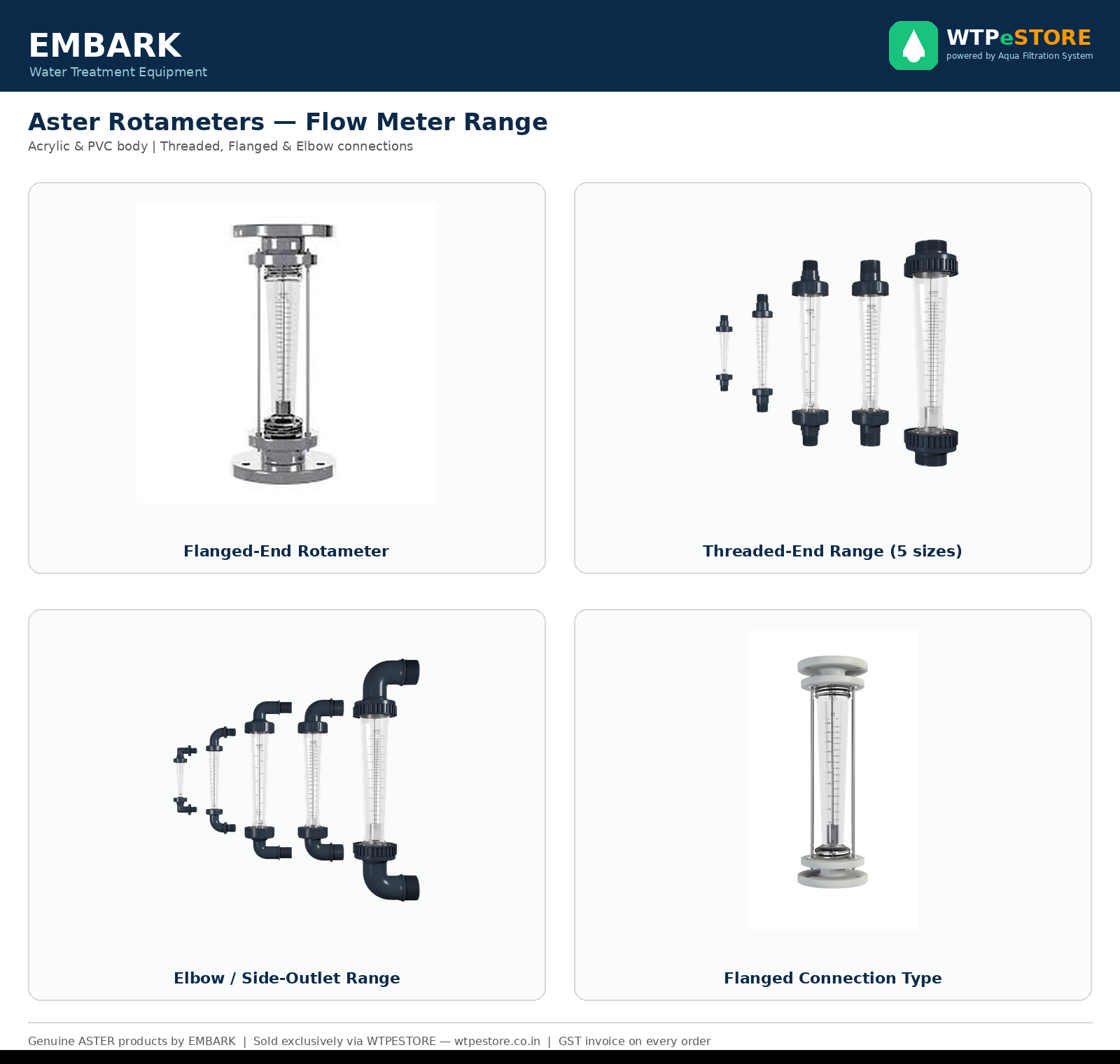
A float sits in a tapered tube. As flow increases the float rises, and you read LPH off the scale. No wiring, no battery, no calibration. This is why around 90 percent of small and medium RO plants use one.
The limitation is that you only get a reading at the moment you look at it. A rotameter cannot tell you how much water passed overnight, or whether today was different from yesterday.
Digital flow meter (FT-650) — sensor plus display
A sensor is fitted in the pipe; water turns a small impeller or generates pulses. The display unit counts those pulses and shows two things: the current flow in LPH and the total volume passed. That totaliser is the single biggest advantage.
Full comparison
| Feature | Rotameter | Digital (FT-650) |
|---|---|---|
| Starting price | ₹504 | ₹10,500 |
| Power supply | Not required | Required (230V or 24V DC) |
| Current flow | Yes | Yes |
| Total volume (totaliser) | No | Yes |
| Panel / SCADA output | No | 4-20mA or RS485 (extra) |
| Reading in poor light | Difficult | Backlit display |
| On dirty water | Tube clouds over | Works acceptably |
| Maintenance | Cleaning the float | Almost none |
| If it fails | Replace the whole unit | Replace only sensor or display |
When a rotameter is enough
- Domestic or small commercial RO (250 to 1,000 LPH) — you only need to confirm permeate and reject are correct
- Softener or filter backwash line — confirming the backwash flow is adequate
- Dosing line indication — an approximate flow reading is sufficient
- Where there is no power connection — a rooftop plant, for example
In all these cases a rotameter is the better choice and saves money. See our rotameter selection guide for the range chart.
When a digital meter is necessary
- Water ATM or selling water — you need to account for volume sold, which is why water ATM dispensers always include a flow sensor
- Production records — pharma, food and dairy plants have to log daily water usage
- Tracking membrane life — only a totaliser tells you how many kilolitres a membrane has produced before its performance dropped
- Panel, PLC or SCADA integration — where the reading is needed in a control room
- Comparing shifts — day versus night flow
FT-650 range and prices
| Type | Range (LPH) | Price | Page |
|---|---|---|---|
| 20NB full bore | 100 – 2,000 | ₹10,500 | View |
| 25NB full bore | 250 – 8,000 | ₹10,500 | View |
| 50NB full bore | 1,000 – 30,000 | ₹12,600 | View |
| 40–80NB insertion | Larger lines | ₹12,600 | View |
| 4-20mA / RS485 output | Add-on | ₹4,200 | View |
Three real situations
1,000 LPH commercial RO for a school
Here you only need to confirm the plant is running correctly. Two rotameters — F1600ES on permeate and F1200ES on reject — cost about ₹1,200 in total. A digital meter here is money wasted.
Water ATM selling water per litre
This will not work without a totaliser, because you have to account for the volume sold. Both a flow sensor and a solenoid valve are required, and they come built into water ATM dispenser units.
Pharma plant requiring validation records
Here the FT-650 is fitted with a 4-20mA/RS485 output and the data is logged by a DL-650 datalogger. It costs more, but it is necessary for audits.
Using both together
On many plants we fit both — a digital meter on the feed line for totalising, and cheaper rotameters on permeate and reject for a quick visual check. The operator sees the plant condition at a glance, and the records are still there. In practice this is the most useful combination.
Rotameter or digital — not sure?
Tell us your plant capacity and whether you need records. We will recommend the right option and send a quotation the same day.
💬 WhatsApp par poochhein 📞 9910646957Frequently asked questions
What is the main difference between a rotameter and a digital flow meter?
The totaliser. A rotameter only shows the flow at the moment you look at it, while a digital flow meter also counts the total volume that has passed. If you need records, or you are selling water, you need a digital meter; otherwise a rotameter is enough.
Is a digital flow meter more accurate?
Both are reasonably accurate when installed correctly. The difference is in function rather than accuracy. A rotameter has to be read by eye so human error is possible, whereas a digital meter shows a clear number that can also be logged.
What is needed to run an FT-650?
A power supply and the correct sensor size. Full bore models are available in 20NB, 25NB and 50NB. For larger lines you need the insertion type, which requires a separate weldon adaptor and the correct sensor length.
Can I switch from a rotameter to a digital meter later?
Yes, but the pipe will have to be cut because the fittings are different. It is better to decide at the start, especially if records or automation may be needed in future.
What is the RS485 output on a digital flow meter for?
It carries the meter data to a panel, PLC or computer, so you can see the flow from a control room and log it. On the FT-650 it is an add-on costing around four thousand rupees.