
Softener regeneration — the complete process explained
Short answer: Regeneration restores exhausted resin by washing it with salt solution. There are five steps in sequence — backwash, brine draw, slow rinse, fast rinse and brine refill — and together they take roughly 60 to 90 minutes.
The step where things most often go wrong is the brine draw, because it is the longest and the easiest to cut short.
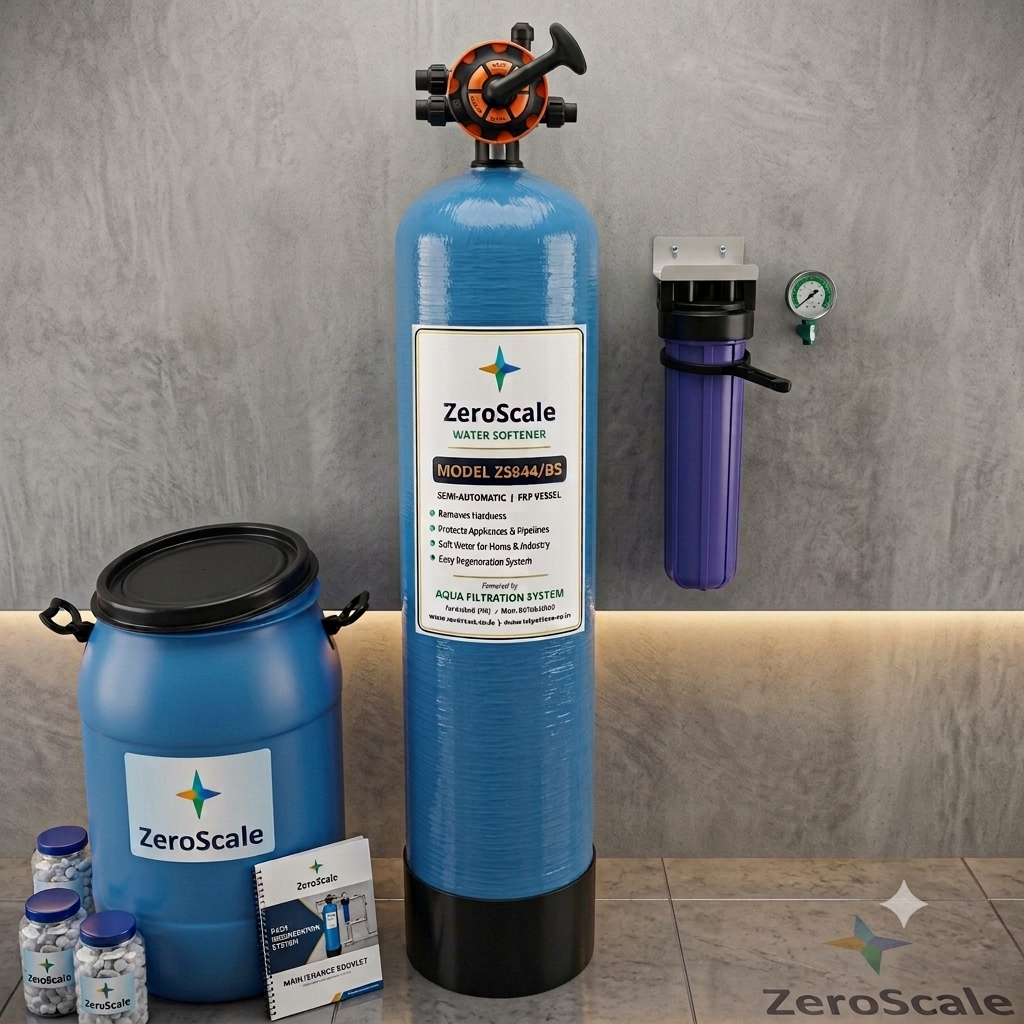
Why regeneration is necessary
Softener resin works by exchange. It holds sodium ions and swaps them for the calcium and magnesium in your water — that is what removes hardness.
Eventually the resin is full of calcium and magnesium and has no sodium left to give. At that point hardness starts appearing in the outlet, and the resin has to be washed with concentrated salt solution to drive the hardness out and reload it with sodium.
The five steps
1. Backwash — 10 to 15 minutes
Water flows upward through the bed, lifting and separating the resin so that accumulated dirt is washed out to drain. It also loosens a bed that has become compacted.
What can go wrong: insufficient flow means the bed does not lift. See our backwash troubleshooting guide.
2. Brine draw and slow rinse — 30 to 40 minutes
Salt solution is drawn from the brine tank and passes slowly down through the resin. This is where the actual chemical exchange happens.
Why it must be slow: the exchange takes time. Brine passing too quickly leaves the resin only partly regenerated, so you use the salt without getting the benefit.
What can go wrong: brine not being drawn at all (blocked brine director or an air leak), or the step being cut short.
3. Fast rinse — 10 to 15 minutes
Water flows down at full rate, flushing out the remaining brine and displaced hardness.
What can go wrong: too short, so salt remains in the bed and the first water out tastes salty.
4. Brine refill
A measured volume of water goes back into the brine tank, which dissolves salt ready for the next regeneration.
What can go wrong: too much water gives weak brine next time; too little gives insufficient brine volume.
5. Return to service
The valve returns to the service position and normal softening resumes.
Timing summary
| Step | Duration | Flow direction |
|---|---|---|
| Backwash | 10 – 15 min | Upward |
| Brine draw and slow rinse | 30 – 40 min | Downward, slow |
| Fast rinse | 10 – 15 min | Downward, fast |
| Brine refill | As set | To brine tank |
| Total | 60 – 90 min |
Manual regeneration
With a manual valve somebody turns the handle through each position and waits the set time at each. It requires an hour or more of attention, which is why it is so often skipped or rushed.
With an automatic EVOLVE valve the whole sequence runs by itself — see our manual vs automatic guide.
How to check it worked
Test the outlet water for hardness with a hardness test kit (₹656) after regeneration.
| Result | Meaning |
|---|---|
| Hardness near zero | Regeneration successful |
| Some hardness remaining | Partial regeneration — check brine draw |
| Hardness unchanged | Brine was not drawn at all |
| Water tastes salty | Rinse was too short |
Why capacity falls over time
If a softener that used to run for 10 days now breaks through at 6, the usual causes are:
- Brine draw problem — the most common. Check the brine tank level falls during that step
- Salt bridging — a crust in the brine tank with a void underneath, so no salt is dissolving
- Insufficient salt per regeneration
- Channelling — a distribution problem, so part of the bed is not used
- Resin fouled by iron or organics
- Resin at end of life — typically after 4 to 7 years
Details on the brine system are in our brine guide.
Water and salt used per regeneration
| Resin volume | Salt per cycle | Water per cycle |
|---|---|---|
| 42 L (1054) | ~5 kg | ~200 L |
| 70 L (1354) | ~8 kg | ~300 L |
| 98 L (1465) | ~12 kg | ~450 L |
| 128 L (1665) | ~15 kg | ~600 L |
| 204 L (2160) | ~25 kg | ~900 L |
These are approximate and vary with the settings, but they give you a basis for estimating running cost.
Best practice
- Do not skip regeneration — once hardness breaks through, damage is already occurring downstream
- Do not cut the brine draw short — it is the step that actually does the work
- Keep the brine tank topped up with salt above the water level
- Test the outlet occasionally so you know the softener is genuinely working
- Break up any salt crust in the brine tank
Softener not performing?
Send your vessel size, hardness and how the capacity has changed, and we will help you find the cause.
💬 WhatsApp par poochhein 📞 9910646957Frequently asked questions
What are the steps in softener regeneration?
Backwash, brine draw with slow rinse, fast rinse, and brine refill, before returning to service. Together they take about sixty to ninety minutes.
Why must the brine draw be slow?
Because regeneration is a chemical exchange that takes time. If brine passes through quickly, the resin is only partly regenerated, so the salt is consumed without achieving the full benefit.
How do I know the regeneration worked?
Test the outlet water for hardness with a test kit afterwards. Near zero hardness means it worked. Remaining hardness points to a brine draw problem, and salty tasting water means the rinse was too short.
Why has my softener capacity fallen?
The most common cause is a brine draw problem, so check that the brine tank level falls during that step. Salt bridging, insufficient salt, channelling, fouled resin or resin at end of life are the other possibilities.
How much salt and water does each regeneration use?
Roughly one hundred to one hundred and fifty grams of salt per litre of resin, and a few hundred litres of water depending on vessel size. A 1465 vessel with about ninety eight litres of resin uses around twelve kilograms of salt and four hundred and fifty litres of water.