
How much media to load in a vessel — the freeboard rule
Short answer: Media should occupy no more than about 60 percent of the vessel volume. The space left above it is called freeboard, and it exists because the bed expands during backwash. Fill a vessel to the top and the backwash simply cannot work.
This is one of the most common mistakes we see — a vessel packed full of media in the belief that more media means better treatment.
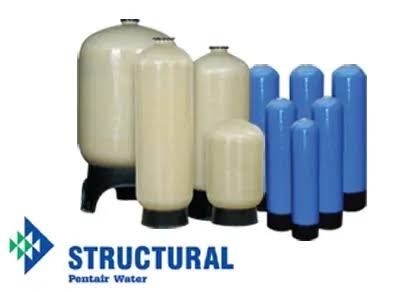
What freeboard is
During normal service water flows downward through the bed. During backwash it flows upward, lifting and separating the media so that trapped dirt is washed out.
For that lifting to happen the bed needs room to expand — typically 30 to 50 percent of its own depth. That space above the media is the freeboard.
- The bed cannot expand, so backwash does not clean it
- Media is carried out through the top distributor and lost
- The bed compacts and channels form, so water passes through untreated
- Pressure drop rises steadily
Maximum media by vessel size
| Vessel | Max resin (litres) |
|---|---|
| 0844 | 22 L |
| 1054 | 42 L |
| 1354 | 70 L |
| 1465 | 98 L |
| 1665 | 128 L |
| 1865 | 163 L |
| 2160 | 204 L |
| 2469 | 307 L |
| 3072 | 500 L |
These figures already allow for freeboard, so do not exceed them.
Gravel layering — usually skipped
Media is not simply poured in. A graded gravel bed goes underneath first, for two reasons — it supports the media and it spreads water evenly across the base.
| Layer | Material | Depth |
|---|---|---|
| Bottom | Coarse gravel (5–8 mm) | Covering the laterals |
| Middle | Medium gravel (2–5 mm) | 50–75 mm |
| Upper | Fine gravel (1–2 mm) | 50–75 mm |
| Top | The working media | Balance, up to 60% |
Loading procedure
- Fit the distribution system first — the bottom laterals and riser pipe. See our distribution guide
- Cover the riser — tape over the top of the riser pipe so no media falls inside. This is the step people forget
- Half fill with water — this cushions the fall and prevents damage to the laterals
- Load the gravel in layers, coarse first
- Load the media — slowly, using a funnel
- Check the level — it must not exceed the figures in the table
- Remove the tape from the riser and fit the valve
- Backwash thoroughly before putting the vessel into service — this removes fines and settles the bed
Media quantities for different duties
| Application | Media | Bed depth |
|---|---|---|
| Softener | Cation resin | As calculated, within the maximum |
| Sand / multigrade filter | Graded sand | Around 30 inches |
| Carbon filter | Activated carbon | Around 30 inches |
| Iron removal | Special media | As per media supplier |
| DM plant | Cation plus anion | As calculated |
For softener resin sizing see our vessel size chart.
Signs of overloading
- Media appearing in treated water — the surest sign
- Media in the downstream cartridge filter
- Backwash water not clearing — the bed is not lifting
- Pressure drop rising steadily even after backwash
- Softener output falling despite regeneration
If you see these, the vessel has to be opened and media removed to bring it within limits.
Backwash flow matters too
Loading correctly is not enough — the backwash flow must also be adequate to lift the bed. Too little flow and it will not expand; too much and media is washed away.
Fit a rotameter on the backwash line so you can set the flow correctly. Model selection is in our rotameter guide.
How long media lasts
| Media | Typical life |
|---|---|
| Softener resin | 4 – 7 years |
| Sand / multigrade | 5 – 8 years |
| Activated carbon | 1 – 3 years (depends on chlorine load) |
| Iron removal media | 2 – 5 years |
Life is shortened by poor backwashing, chlorine attack on resin, and heavy sediment loading.
Need media or help with loading?
Send your vessel size and application, and we will confirm the correct media quantity and gravel layering.
💬 WhatsApp par poochhein 📞 9910646957Frequently asked questions
How much media should a vessel hold?
No more than about sixty percent of the vessel volume. The space above, called freeboard, is needed because the bed expands during backwash. Filling the vessel completely means the backwash cannot work.
What is freeboard and why does it matter?
Freeboard is the empty space above the media. During backwash water flows upward and lifts the bed, which needs thirty to fifty percent of its own depth to expand into. Without it the media is never properly cleaned.
Why is gravel needed under the media?
It supports the media and spreads water evenly across the base. Without gravel, fine media works into the lateral slots and blocks them, after which water channels through and the vessel treats far less than it should.
What should be done before loading media?
Fit the distribution system first and tape over the top of the riser pipe so media cannot fall inside. Half fill the vessel with water to cushion the fall, then load gravel in layers followed by the media.
How do I know if the vessel is overloaded?
Media appearing in the treated water or in the downstream cartridge filter is the clearest sign. Backwash water that never runs clear, or pressure drop that keeps rising, also point to overloading.