Four chemicals that protect a steam boiler from the three things that destroy it — dissolved oxygen, scale on the heat-transfer surface, and carbonic acid in the condensate return. Supplied with dosing guidance by boiler pressure.
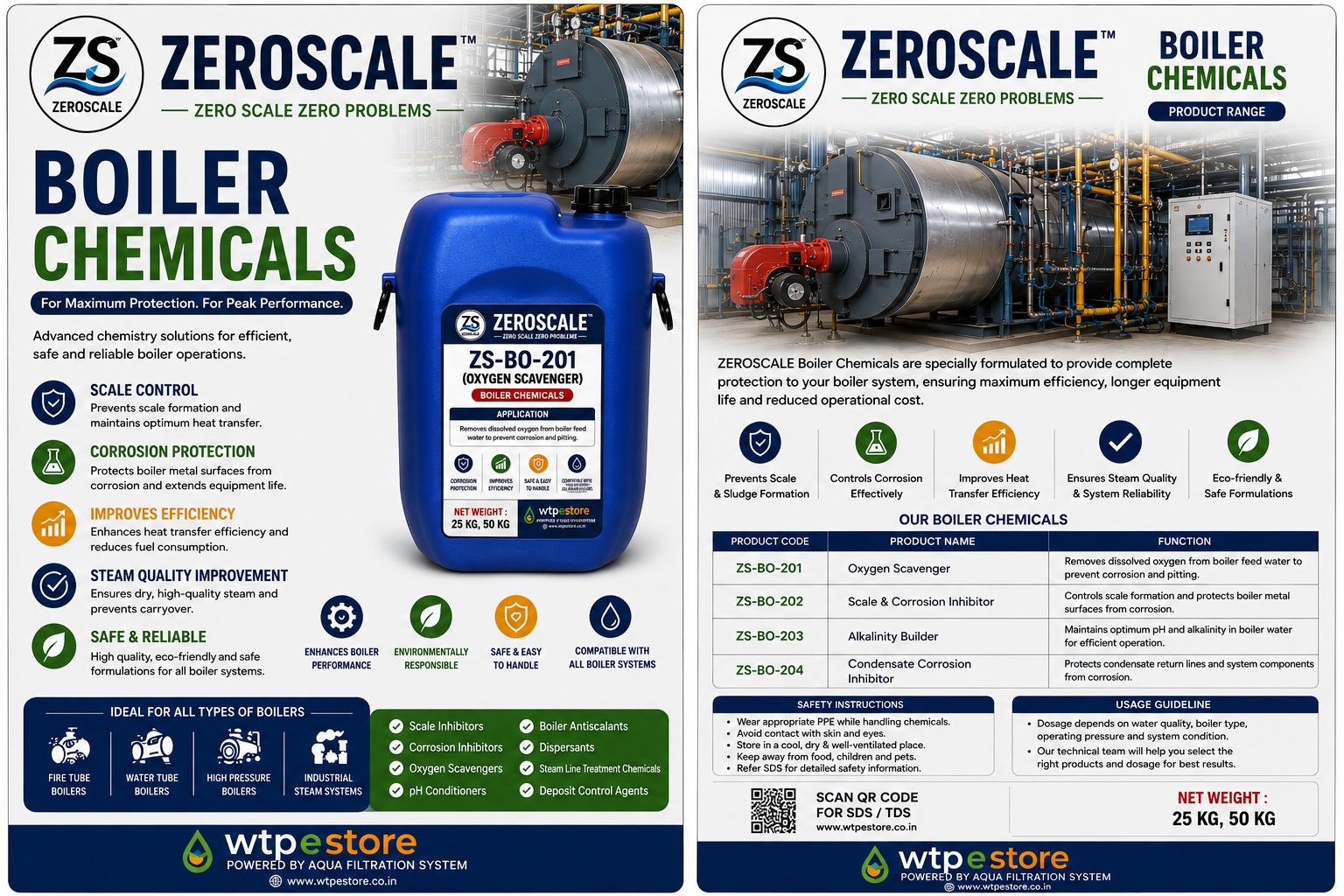
A steam boiler fails in ways that give very little warning. The three main causes are all chemical, and all preventable — which is why a boiler running without a treatment programme is a boiler running on borrowed time.
Dissolved oxygen is the first. Cold make-up water carries oxygen; heating drives it out of solution and it attacks the steel at concentrated points. The result is pitting — deep narrow holes that punch through a tube wall while the metal around them still measures at full thickness. A tube can fail from a pit while your thickness survey reads perfectly acceptable.
Scale is the second, and it costs you money every hour before it costs you a tube. A layer barely a millimetre thick insulates the heat-transfer surface enough to raise fuel consumption measurably. Worse, it insulates the tube metal from the water meant to cool it, so the metal runs hotter than design — leading to bulging, cracking and failure.
Carbonic acid is the third, and it works on the part of the system people inspect least. Bicarbonate alkalinity in feed water breaks down at boiler temperature and releases CO₂, which travels with the steam and turns acidic when it condenses. Return lines corrode from the inside, and the iron they shed comes back to deposit inside the boiler.
Click any product for full specification, dosing guidance and FAQs.
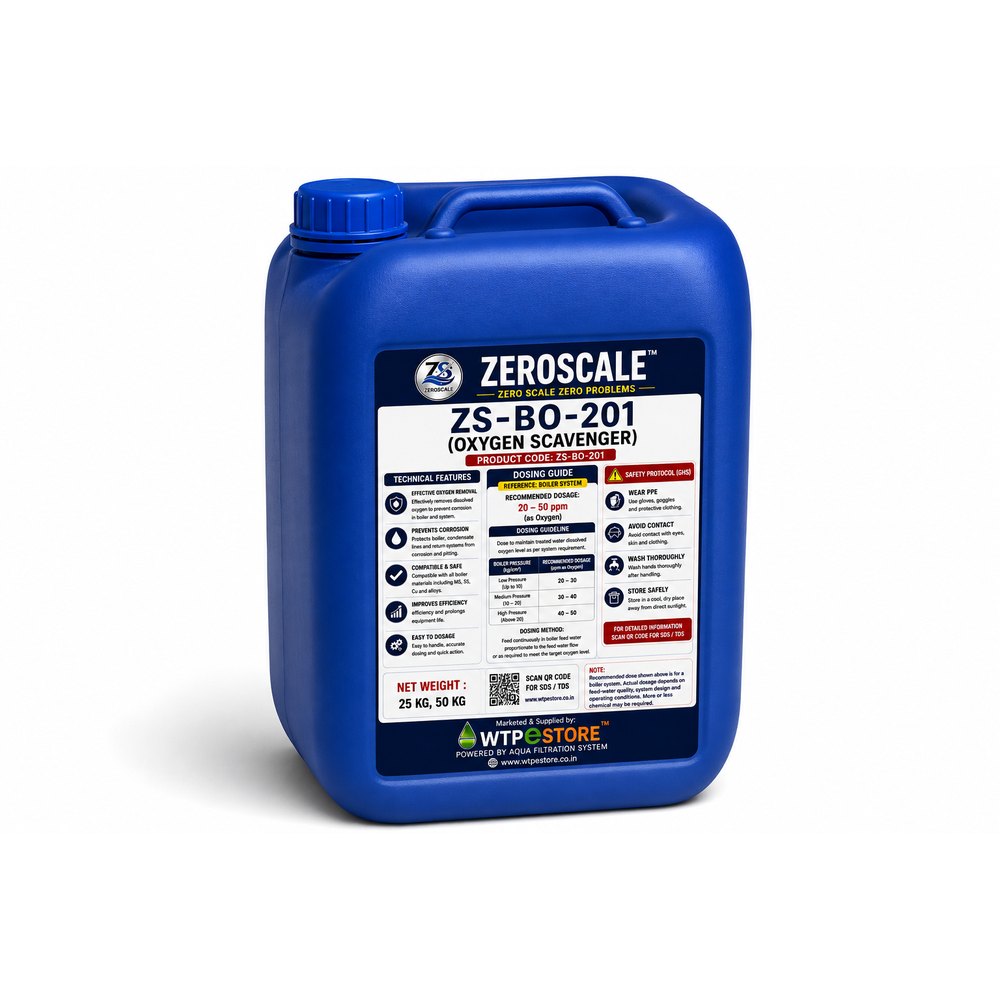 ZS-BO-201
Sulphite/amine based scavenger that removes dissolved oxygen from feed water before it can pit the boiler tubes.
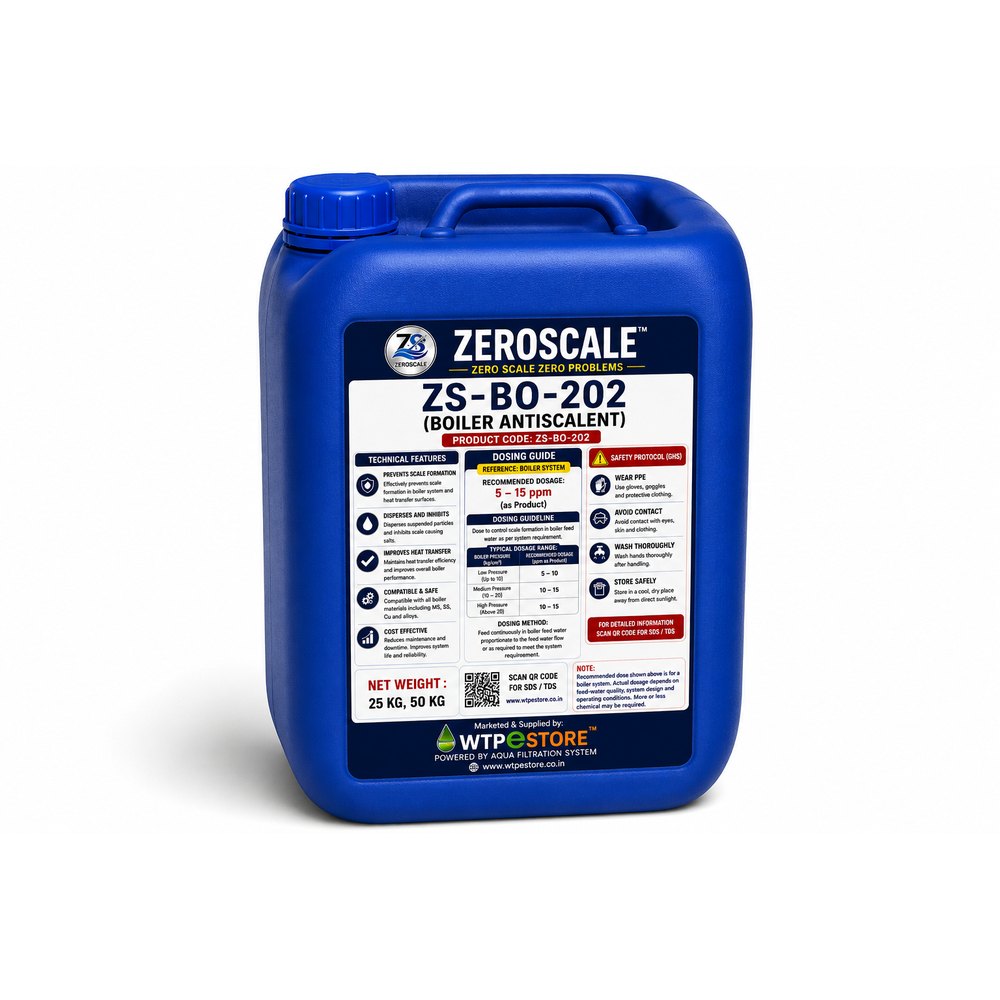 ZS-BO-202
Conditions residual hardness into a free-flowing sludge that leaves with blowdown, instead of hard scale bonded to the tubes.
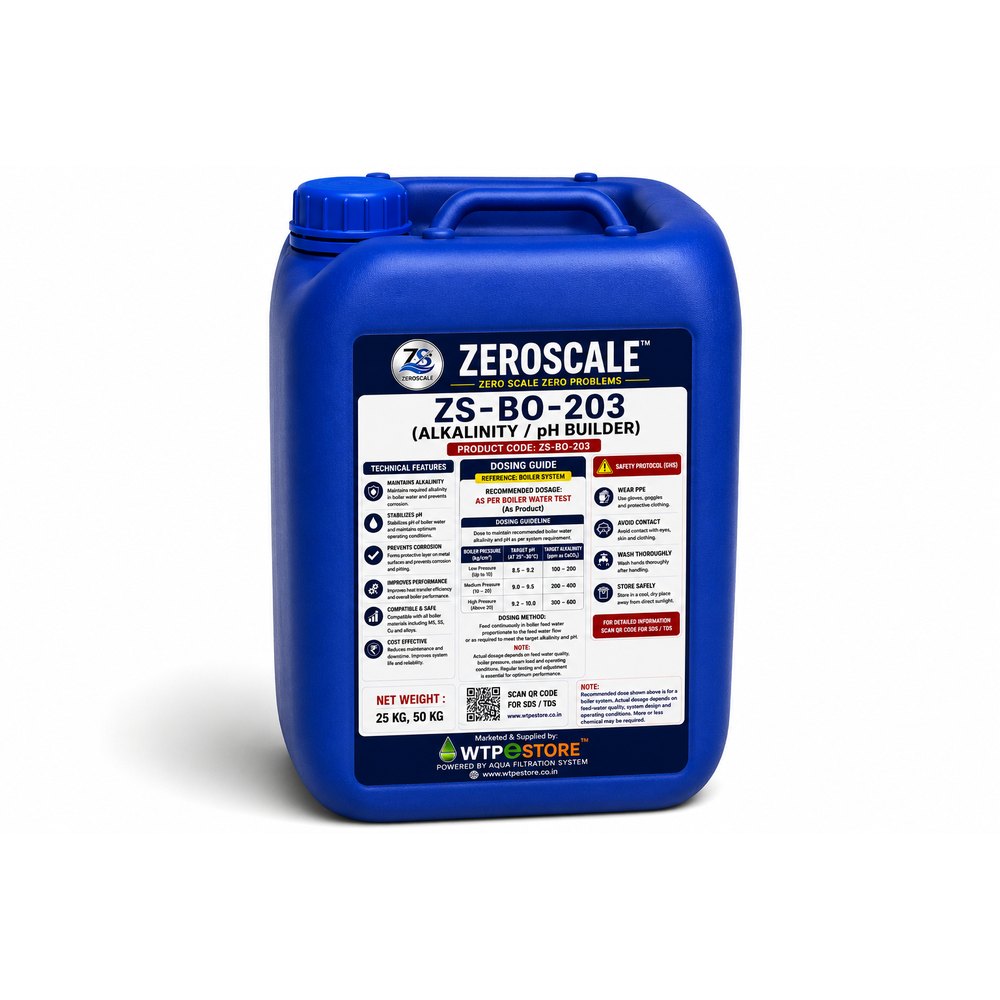 ZS-BO-203
Holds boiler water alkalinity and pH in the correct band — low enough to avoid embrittlement, high enough to stop corrosion.
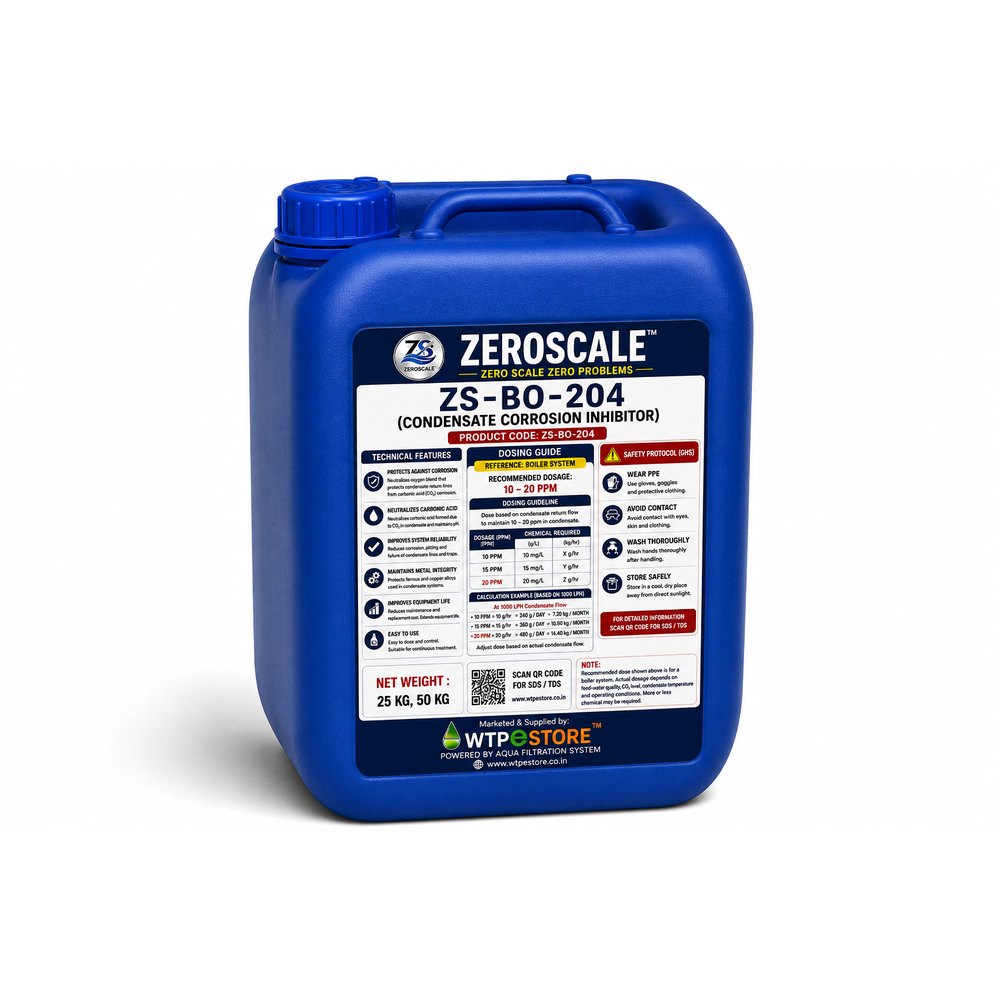 ZS-BO-204
Neutralising amine that travels with the steam and protects the whole return network from carbonic acid.
Start from the symptom you are seeing — it usually points straight to the chemical.
| What you are seeing | What it points to |
|---|---|
| Pitting found in tubes at inspection | Dissolved oxygen — dose oxygen scavenger and hold a sulphite residual |
| Fuel consumption creeping up for same steam | Scale on heat-transfer surfaces — dose boiler antiscalant and review blowdown |
| Boiler water pH drifting or unstable | Alkalinity too low or swinging — dose alkalinity builder |
| Pinhole leaks in condensate return lines | Carbonic acid corrosion — dose condensate inhibitor |
| Iron coming back in the condensate | Return lines corroding — treat with neutralising amine |
| Softener slipping hardness through | Residual hardness — antiscalant conditions it, and fix the softener |
Oxygen scavenger and antiscalant on every boiler. These two are not optional — they address the two failures that scrap boiler tubes.
Alkalinity builder dosed against your daily boiler water test. pH, alkalinity and TDS move together — read them as a set, never one alone.
Condensate inhibitor wherever you recover condensate. Test pH at the furthest return point, not the nearest — that is where systems fail.
Blowdown. Every chemical here converts a problem into something that leaves with blowdown. Skip it and the treatment achieves nothing.
At minimum, oxygen scavenger and antiscalant, dosed continuously. Add alkalinity builder for pH control, and condensate inhibitor wherever condensate is returned. Most industrial boilers run all four.
It depends on feed water quality, make-up ratio and boiler pressure. Send us your feed water report, boiler capacity and pressure rating and we will work out the daily dose and monthly consumption for each chemical.
Yes. A softener removes most hardness but never all of it, and it removes nothing at all when it is due for regeneration. It also does nothing about dissolved oxygen or condensate CO₂ — different problems entirely.
Boiler water pH, alkalinity and TDS as a minimum, plus sulphite residual to confirm oxygen scavenging. Condensate pH at least weekly. Without a log you are dosing blind.
Set the schedule by boiler water TDS against your boiler's limit. Blowdown is what removes the conditioned sludge and controls concentration — dosing chemicals without adequate blowdown makes control impossible.
No. These are preventive. Existing hard scale needs mechanical or acid cleaning during shutdown. Tell us the boiler type and deposit condition and we will advise on cleaning.
Send us your water analysis, system capacity and running hours — we will work out which chemicals you need, at what dose, and what it costs per month.
