Six chemicals that keep a reverse osmosis plant running at its rated output — from the antiscalant that runs every hour to the CIP cleaners you reach for twice a year. Supplied with the dosing guidance to use them properly.
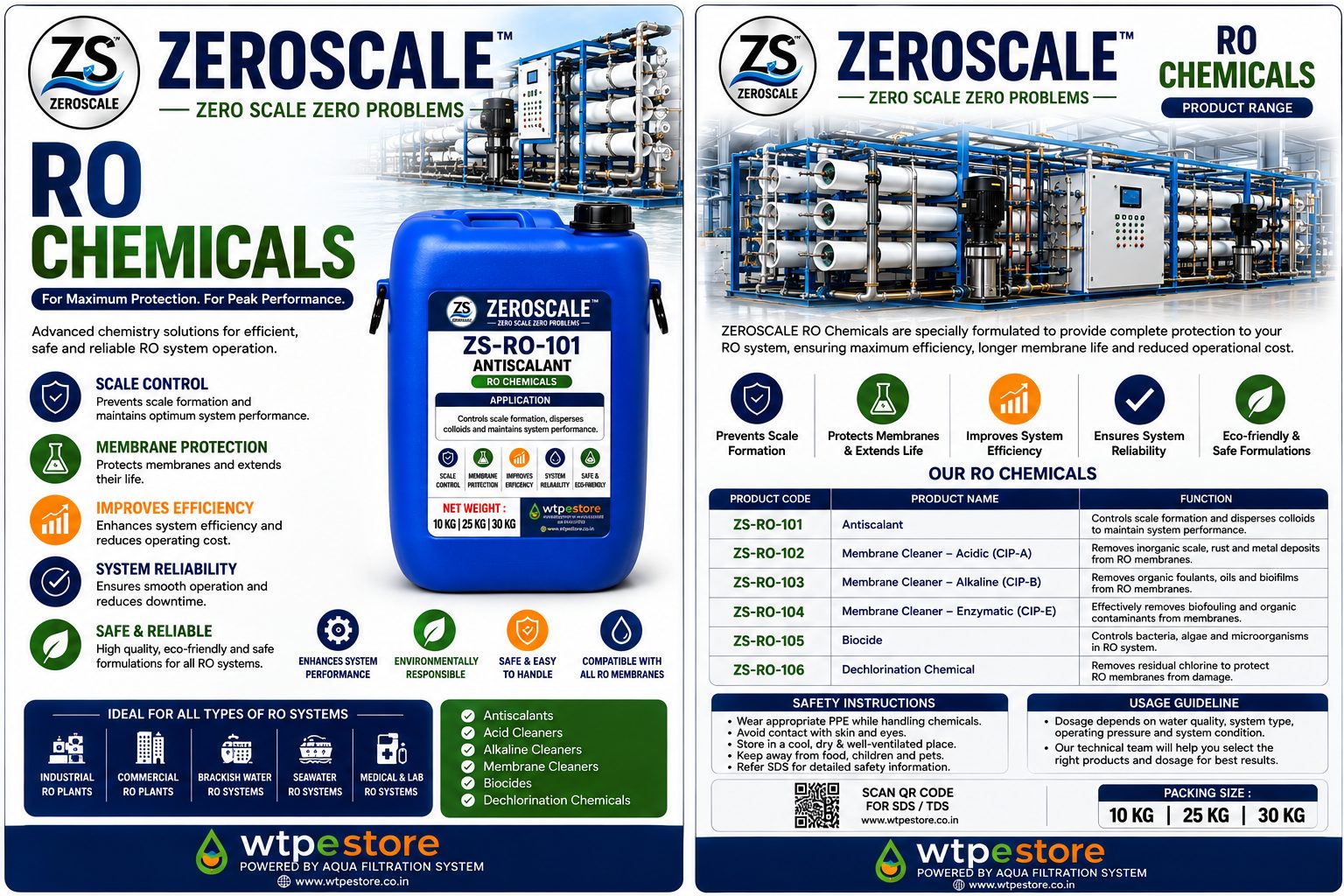
A reverse osmosis plant looks simple from outside — water in, clean water out. Inside the pressure vessel the picture is different. Around 60 to 75 percent of the feed passes through the membrane as permeate, and every dissolved salt that does not pass stays behind in a shrinking stream. By the last element, salts sit at three or four times their feed concentration.
That concentration is what drives every problem an RO plant develops. Calcium carbonate crosses its solubility limit and crystallises on the membrane. Silica polymerises. Bacteria settle in the warm wet channels and build a slime layer. Chlorine in municipal feed oxidises the polyamide layer permanently. Iron from borewell water deposits as oxide.
Chemicals are not an optional extra on an RO plant — they are what stands between your membranes and each of those failures. A plant running without antiscalant on hard feed water will scale within weeks. A plant on chlorinated municipal supply without SMBS will lose salt rejection permanently, and no cleaning brings it back.
Click any product for full specification, dosing guidance and FAQs.
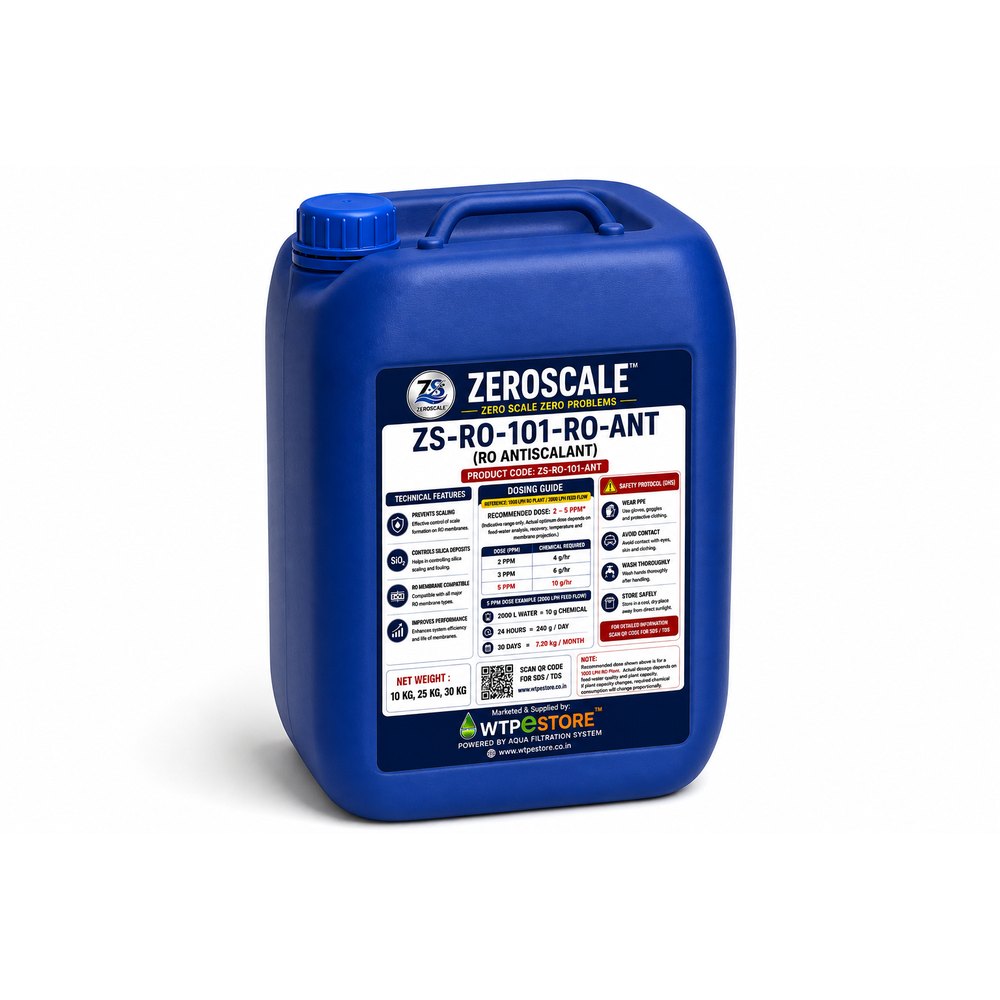 ZS-RO-101
Prevents CaCO₃, CaSO₄, BaSO₄ and silica crystallising on the membrane surface. The one chemical that runs continuously on every RO plant.
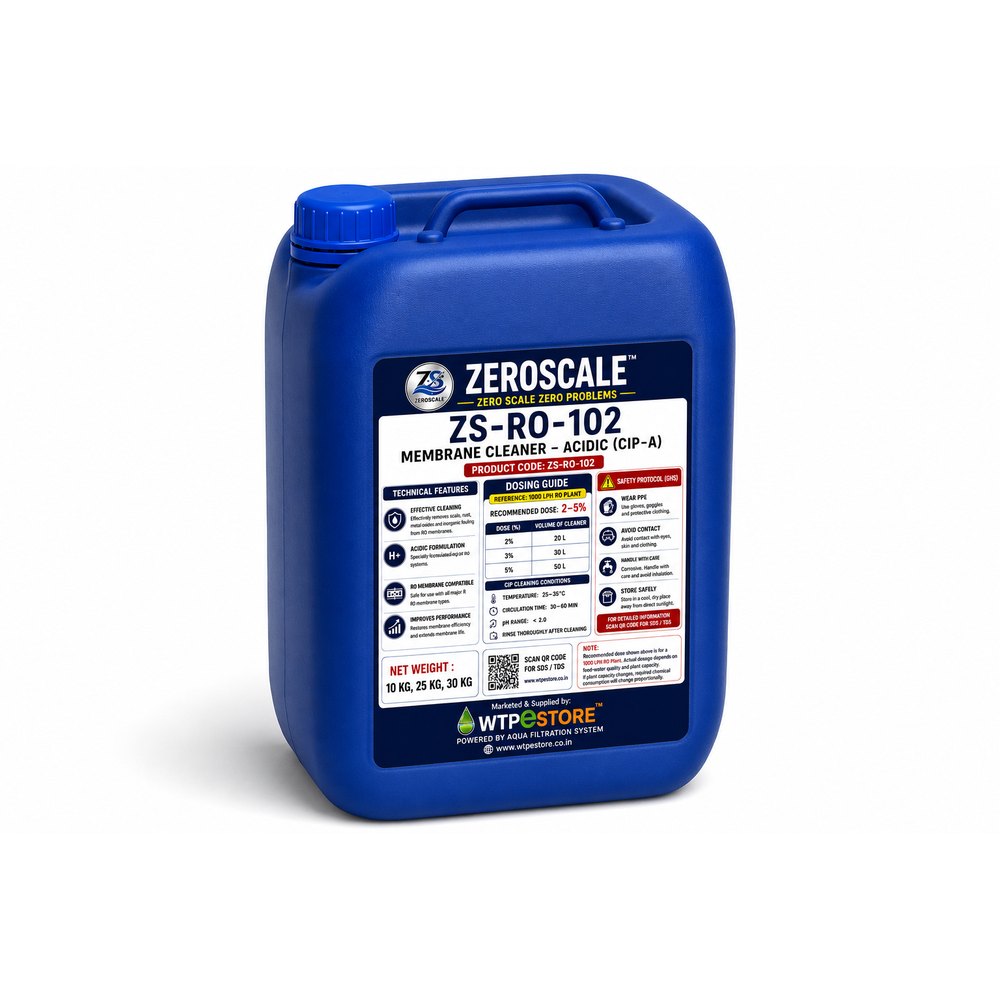 ZS-RO-102
Low-pH cleaner that dissolves carbonate scale, sulphate scale, iron and metal-oxide fouling during clean-in-place.
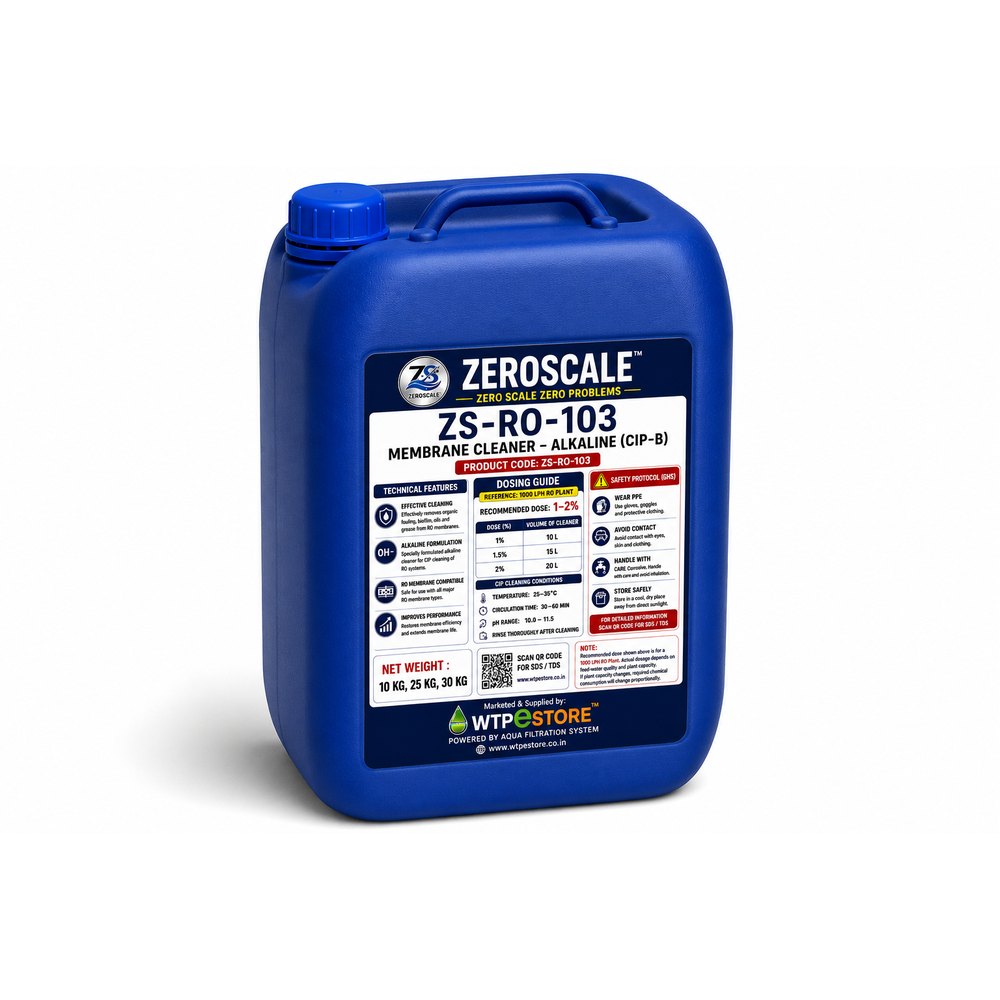 ZS-RO-103
High-pH cleaner for organic matter, biofilm, oils and colloidal fouling that acid cleaning cannot lift.
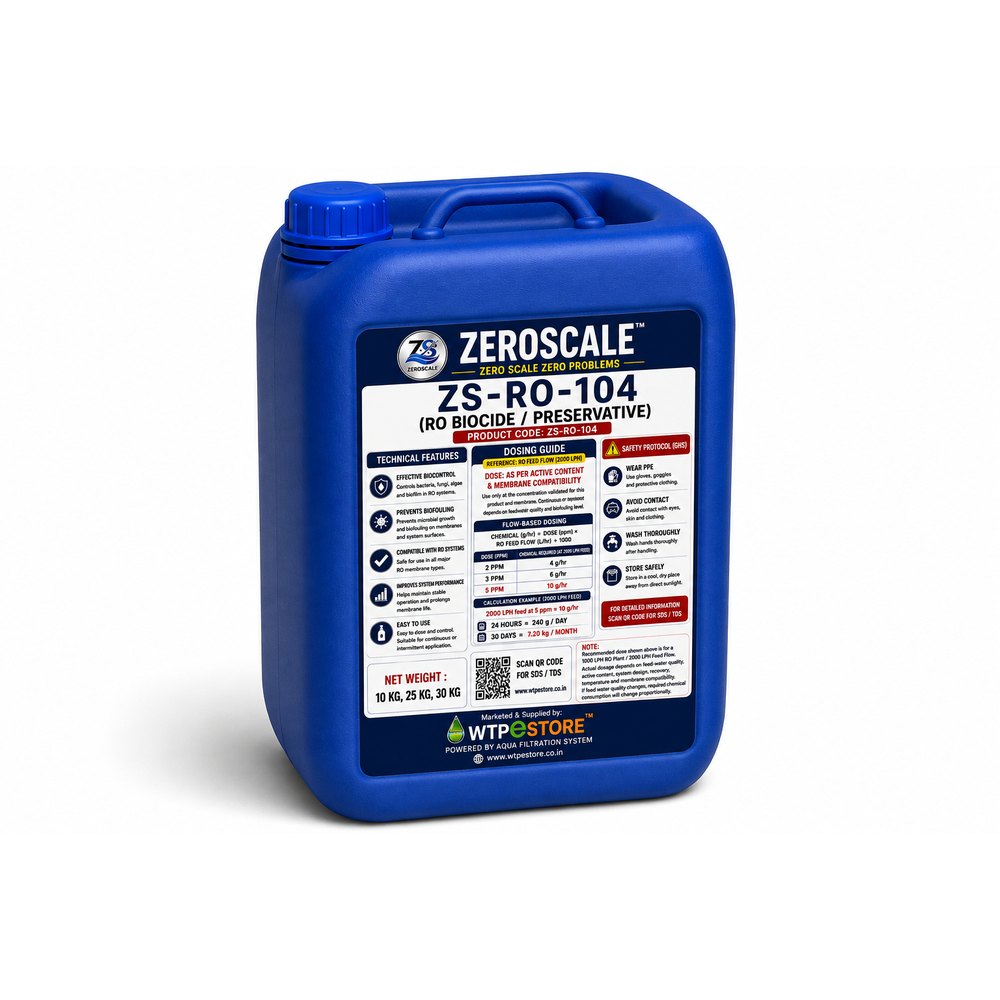 ZS-RO-104
Non-oxidising biocide for microbial control during running, and preservation when the plant sits idle for weeks.
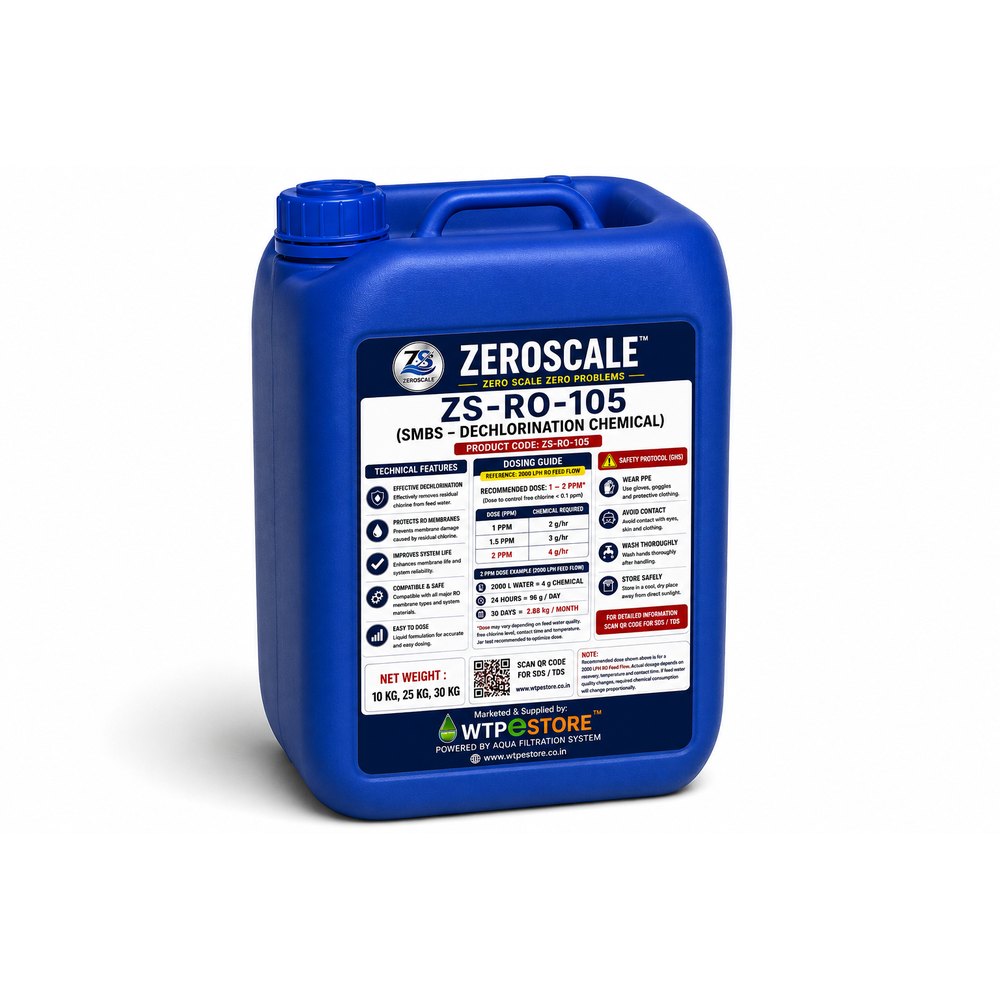 ZS-RO-105
Neutralises residual free chlorine before it reaches the membrane. Essential on any municipal or chlorinated feed.
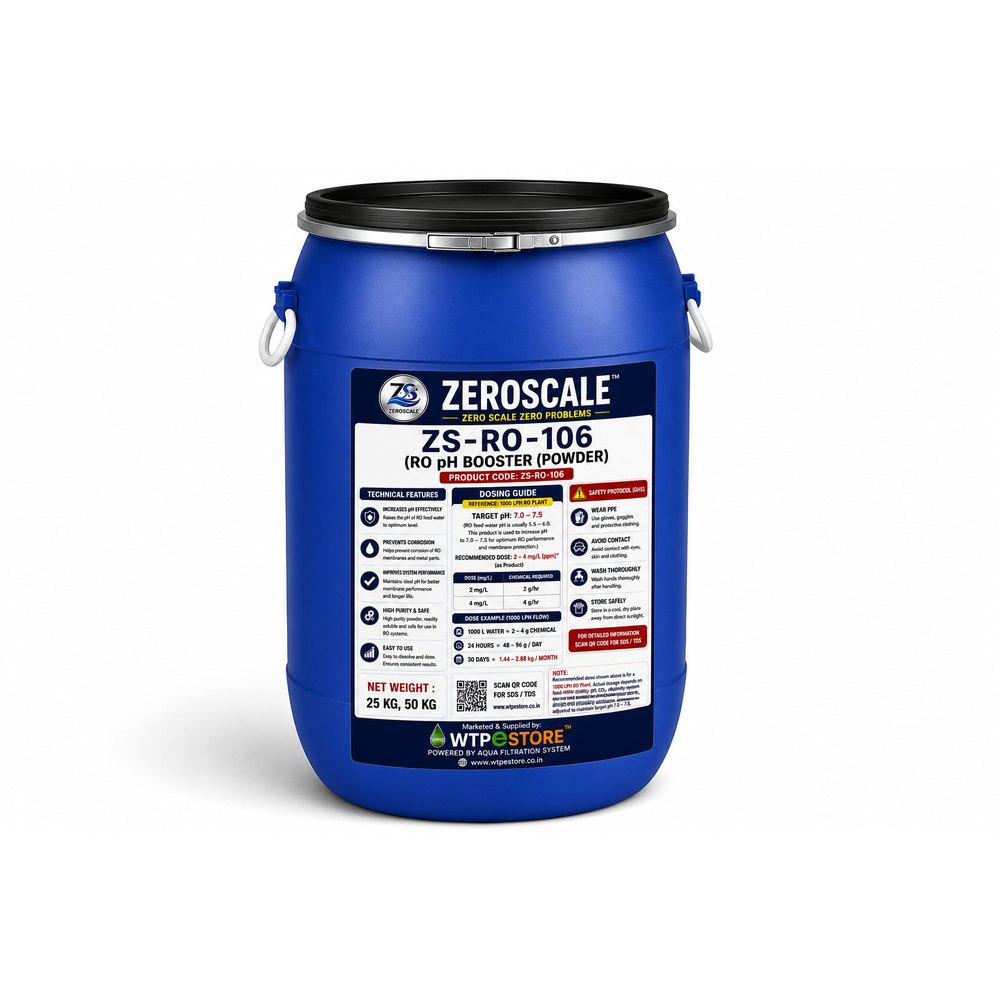 ZS-RO-106
Raises permeate or feed pH. Stops aggressive RO water corroding pipes, tanks and fittings downstream.
Start from the symptom you are seeing — it usually points straight to the chemical.
| What you are seeing | What it points to |
|---|---|
| Permeate flow dropping, reject pressure rising | Scale on the membrane surface — dose antiscalant continuously, and clean with acidic CIP |
| Differential pressure up, rejection still good | Organic fouling or biofilm — clean with alkaline CIP, then control with biocide |
| Product TDS rising, flow holding or rising | Chlorine damage — check free chlorine and dose SMBS |
| Reddish-brown deposits on cartridges | Iron fouling — acidic CIP removes iron oxide |
| Pinhole leaks in permeate piping | Low permeate pH — dose pH booster |
| Plant idle for weeks | Preserve membranes with biocide before shutdown |
Antiscalant on every plant. SMBS wherever feed carries chlorine — municipal supply, or raw water storage that gets chlorinated.
Both cleaners — acidic and alkaline. Most plants clean every 3–6 months; running out mid-fouling costs far more than the drum.
Biocide as a shock dose where bacterial counts climb, and as a preservation fill before any shutdown longer than a week.
pH booster on plants where permeate runs through metal piping, or where product water must meet a pH specification.
Antiscalant from the first day of running, and SMBS if the feed carries any chlorine. Both cleaners should be in stock before you need them. Biocide comes in when the plant will sit idle or when counts start rising.
It scales with feed flow. A 1,000 LPH plant at 3 ppm antiscalant uses roughly 2 kg a month running 10 hours a day. Send us your capacity, running hours and water report and we will work out your monthly consumption for each chemical.
Not effectively. Acid removes minerals, alkali removes organics — they work on entirely different deposits and cannot be mixed. Plants that keep only one cleaner usually find their CIP results getting worse over time.
Three triggers, whichever comes first: normalised permeate flow down 10–15%, differential pressure up 15%, or salt passage up 10%. Keep a daily log — without a baseline you cannot tell what is normal for your plant.
Yes, at recommended dose levels. Antiscalant and SMBS leave with the reject or react away completely. Confirm you need food-grade material when ordering for packaged drinking water.
Yes — we supply Edose metering pumps and dosing systems alongside the chemicals. Tell us your plant capacity and we will recommend the right pump range for each chemical.
Send us your water analysis, system capacity and running hours — we will work out which chemicals you need, at what dose, and what it costs per month.
