
How to extend RO membrane life — seven practical steps
Short answer: Membrane life depends almost entirely on what happens before the membrane. Get the pre-treatment, antiscalant dosing and dechlorination right and elements last 3 to 5 years. Get them wrong and the same elements fail in 12 to 18 months.
The seven steps below are all inexpensive relative to the cost of replacing membranes.
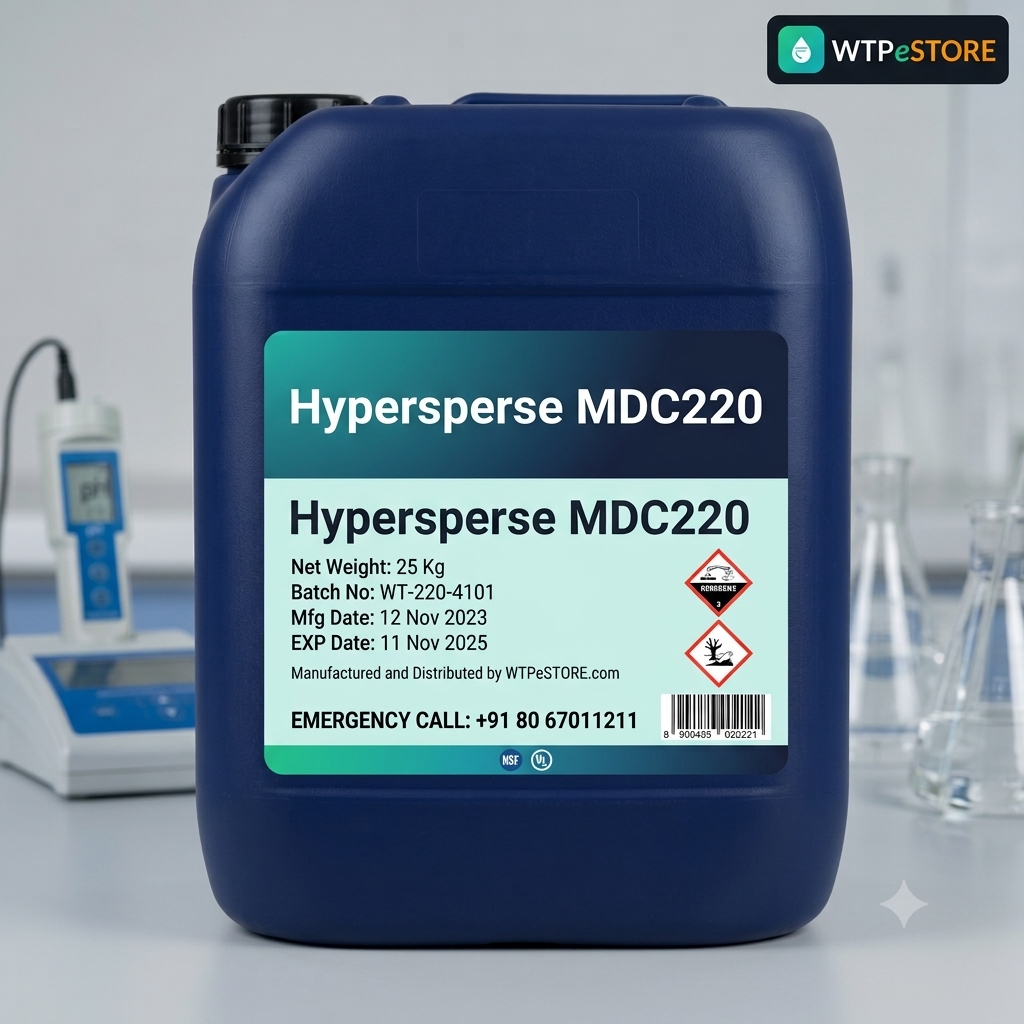
1. Remove chlorine completely
Chlorine causes permanent, irreversible damage to thin film membranes. Even small residual chlorine, present continuously, degrades them over months.
What to do:
- Dose SMBS ahead of the membrane — see our SMBS page
- Or fit an activated carbon filter, which also removes chlorine
- Test residual chlorine before the membrane — it should be zero
2. Dose antiscalant correctly
Antiscalant prevents calcium and other salts from crystallising on the membrane surface. Without it, scaling on high hardness water is rapid.
What to do:
- Calculate the dose properly — see our dosing calculation guide
- Fit a level switch (₹1,050) so the plant never runs with an empty tank
- Check the tank level weekly — if it is not falling, the pump is not dosing
Running without antiscalant even for a few weeks can scale a membrane badly. The level switch is the cheapest protection available.
3. Keep the pre-filtration right
Suspended particles foul the membrane surface, and once embedded they are difficult to remove even by CIP.
- 5 micron cartridge as the final stage — see our micron guide
- Add a screen filter or bag filter upstream where the water is dirty
- Change cartridges on pressure drop, not guesswork — see our cartridge guide
- Aim for SDI below 3 — see our turbidity and SDI guide
4. Do not over-recover
Pushing recovery higher to save water concentrates the reject stream, which accelerates scaling — particularly on the last element in the series.
| Feed TDS | Safe recovery |
|---|---|
| Below 500 | 70 – 75% |
| 500 – 1,000 | 65 – 70% |
| 1,000 – 2,000 | 60 – 65% |
| Above 2,000 | 50 – 60% |
The water saved by over-recovery is worth far less than the membrane it costs.
5. Monitor weekly
Six readings, once a week, tell you months in advance that something is changing:
- Permeate flow and reject flow — rotameters
- Feed pressure and permeate pressure — gauges
- Feed TDS and permeate TDS — TDS meters
Reading them together is what identifies fouling early, while it is still reversible. See our membrane replacement guide for how to interpret them.
6. Clean before it is too late
CIP cleaning works when fouling is caught early. Left too long, deposits become firmly attached and cleaning recovers only part of the performance.
Clean when:
- Permeate flow has fallen 10 to 15 percent from baseline
- Pressure drop across the housing has risen 15 percent
- Rejection has fallen noticeably
Do not wait until flow has halved. See our CIP guide.
7. Handle shutdowns properly
Membranes left standing wet grow bacteria, and biofouling is one of the hardest problems to reverse.
| Shutdown period | What to do |
|---|---|
| A few hours | Nothing special |
| 1 – 3 days | Flush with permeate before stopping |
| Over 3 days | Flush, then preserve with a biocide solution |
| Long term storage | Preservative solution, sealed, cool |
For biocide options see our RO biocide page.
What it costs to do this properly
| Protection | Approximate cost |
|---|---|
| Dosing pump plus level switch | ₹8,000 |
| Cartridge filter and housing | ₹1,000 |
| Two pressure gauges | ₹630 |
| Two rotameters | ₹1,100 |
| TDS meters, feed and permeate | ₹5,500 |
| SDI test kit | ₹5,565 |
Against the cost of replacing a set of membranes prematurely, this is a small investment — and it also tells you what is happening in the plant.
What actually kills membranes
- Chlorine — permanent damage, entirely preventable
- Running without antiscalant — usually because a tank ran empty unnoticed
- Poor pre-filtration — cartridges changed too late
- Over-recovery — chasing water savings
- Standing wet during shutdown — biofouling
- No monitoring — problems only found when they are severe
Every one of these is avoidable at low cost.
Protect your membranes
Send your feed water details and current setup, and we will identify what is shortening membrane life and what to fix first.
💬 WhatsApp par poochhein 📞 9910646957Frequently asked questions
What is the single most important thing for membrane life?
Removing chlorine completely. Chlorine causes permanent irreversible damage to thin film membranes, and municipal supply always contains it. SMBS dosing or activated carbon filtration prevents this.
How does antiscalant extend membrane life?
It prevents calcium and other salts crystallising on the membrane surface. Without it, scaling on hard water is rapid. Fitting a level switch on the dosing tank ensures the plant never runs with an empty tank unnoticed.
Why is high recovery bad for membranes?
Pushing recovery higher concentrates the reject stream, which accelerates scaling especially on the last element. The water saved is worth far less than the membrane life it costs.
When should a membrane be cleaned?
When permeate flow has fallen ten to fifteen percent from baseline, or pressure drop has risen fifteen percent. Cleaning works well when fouling is caught early, but recovers only part of the performance if left too long.
What should be done when shutting a plant down?
For one to three days, flush with permeate before stopping. Beyond three days, flush and then preserve with a biocide solution, because membranes left standing wet grow bacteria and biofouling is very hard to reverse.