
RO membrane housings — pressure rating and selection
Short answer: The housing must match three things — the element size, your operating pressure with a safety margin, and your piping arrangement. Getting the pressure rating wrong is the dangerous mistake, because a housing failure under pressure is a serious safety incident.
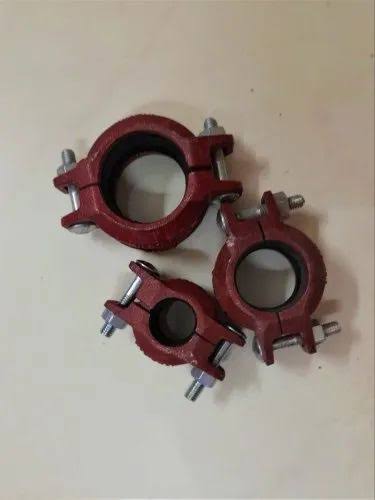
Pressure rating — the critical specification
Housings are rated for maximum working pressure. Your operating pressure must be comfortably below that rating, not at it.
| Application | Operating pressure | Housing rating needed |
|---|---|---|
| Low pressure RO | 7 – 10 kg/cm² | At least 15 kg/cm² |
| Brackish water RO | 10 – 15 kg/cm² | At least 21 kg/cm² |
| High recovery brackish | 15 – 20 kg/cm² | At least 28 kg/cm² |
| Seawater RO | 50 – 70 kg/cm² | Special high pressure vessels |
Connection sizes
Housings are available with different port sizes to suit your piping. We stock membrane housings in 25NB, 40NB and 50NB.
Match the port to your line size — see our NB size guide for the relationship between flow and pipe size.
Elements per housing
Housings hold one or more elements in series:
| Elements | Suits | Note |
|---|---|---|
| 1 element | Small plants | Simplest, easiest to service |
| 2 elements | Medium plants | Common arrangement |
| 3 elements | Larger plants | Better recovery per housing |
| 4 – 6 elements | Industrial | Long vessel, needs space to load |
Allow space at one end to withdraw the elements. A six element vessel needs roughly its own length again in clear space, which people often forget when planning the layout.
Material
- FRP: the standard choice — light, corrosion free, and available in all pressure ratings
- SS: used where mechanical protection matters or in specific industrial settings, but heavier and more expensive
For most water treatment work FRP is correct — the same reasoning as in our FRP vs MS guide.
Port arrangement
| Type | Description | Suits |
|---|---|---|
| Side port | Feed and reject on the side | Most common, easier piping |
| End port | Feed and reject at the ends | Compact skids |
The permeate port is normally at one or both ends regardless.
O-rings and brine seals
These small parts matter more than people expect:
Element O-rings
Seal the permeate tube connection. A failed O-ring lets feed water leak directly into the permeate — so permeate TDS rises sharply while the membrane itself is perfectly fine.
Brine seal
A lip seal around the element that forces all feed water to pass through the element rather than around it. A worn brine seal means water bypasses the membrane, so flow looks high but rejection is poor.
Fitting an element correctly
- Clean the housing internally and check for scoring
- Fit a new brine seal, with the lip facing the feed end — reversed, it does nothing
- Lubricate O-rings with glycerine or approved lubricant, never oil
- Slide the element in from the feed end, gently
- Fit the end caps and retaining rings securely
- Check the retaining ring is properly seated — this is what holds the pressure
- Pressurise slowly and check for leaks
Common housing problems
| Symptom | Likely cause |
|---|---|
| Permeate TDS suddenly high | O-ring failed, feed leaking into permeate |
| High flow but poor rejection | Brine seal worn, water bypassing |
| Leak at the end cap | Cap O-ring, or retaining ring not seated |
| Element hard to remove | Scaling, or brine seal stuck |
| Housing bulging | Over-pressure — replace immediately |
Safety when servicing
- Depressurise completely before opening any end cap
- Confirm the pressure gauge reads zero
- Open the permeate line to release trapped pressure
- Stand to one side when removing the retaining ring
- Never attempt to open a housing while the pump is running
What to specify when ordering
- Element size — 4040, 8040 and so on
- Number of elements per housing
- Operating pressure
- Port size in NB and side or end port
- Available space for element removal
Need housings or seals?
Send your element size, quantity per housing and operating pressure, and we will supply the right housing and seal kit.
💬 WhatsApp par poochhein 📞 9910646957Frequently asked questions
What pressure rating should a membrane housing have?
Comfortably above your operating pressure, not at it. For brackish water RO running at ten to fifteen kg per cm2, a housing rated at least twenty one kg is appropriate, because pressure surges can momentarily exceed the steady reading.
What does the brine seal do?
It is a lip seal around the element that forces all feed water to pass through the membrane rather than around it. A worn brine seal lets water bypass, so flow looks high but rejection is poor.
Why did permeate TDS rise suddenly after changing a membrane?
Most often a failed or badly fitted O-ring on the permeate tube connection, which lets feed water leak directly into the permeate. The membrane itself may be perfectly fine, so check the seals before condemning it.
Which way round does the brine seal go?
The lip must face the feed end so that pressure pushes it outward against the housing wall. Fitted the wrong way round it does nothing at all and water simply bypasses the element.
How much space is needed to service a housing?
Roughly the length of the vessel again in clear space at one end, so that elements can be withdrawn. This is easy to overlook when planning a layout and awkward to fix afterwards.