
RO plant pre-treatment — designing it correctly
Short answer: Pre-treatment is decided by your water analysis, not by a standard package. The order is always the same though — coarse filtration first, then media filters, then chemical dosing, then fine filtration, then the membrane.
Pre-treatment is where membranes are protected or lost. Nearly every premature membrane failure traces back to something missing or undersized here.
Start with the water analysis
You cannot design pre-treatment without knowing what is in the water:
| Parameter | If high | Treatment needed |
|---|---|---|
| Turbidity / SDI | Above 5 NTU / SDI above 3 | Media filter, cartridge |
| Hardness | Above 300 ppm | Softener or antiscalant |
| Iron | Above 0.3 ppm | Iron removal filter |
| Chlorine | Any | Carbon filter or SMBS |
| Organic matter | Present | Carbon filter |
| Bacteria | Present | Chlorination then dechlorination |
The correct order
- Raw water tank — settling and buffer storage
- Feed pump
- Screen or disc filter — coarse particles, cleaned and reused
- Multigrade / sand filter — turbidity
- Iron removal filter — if iron is present
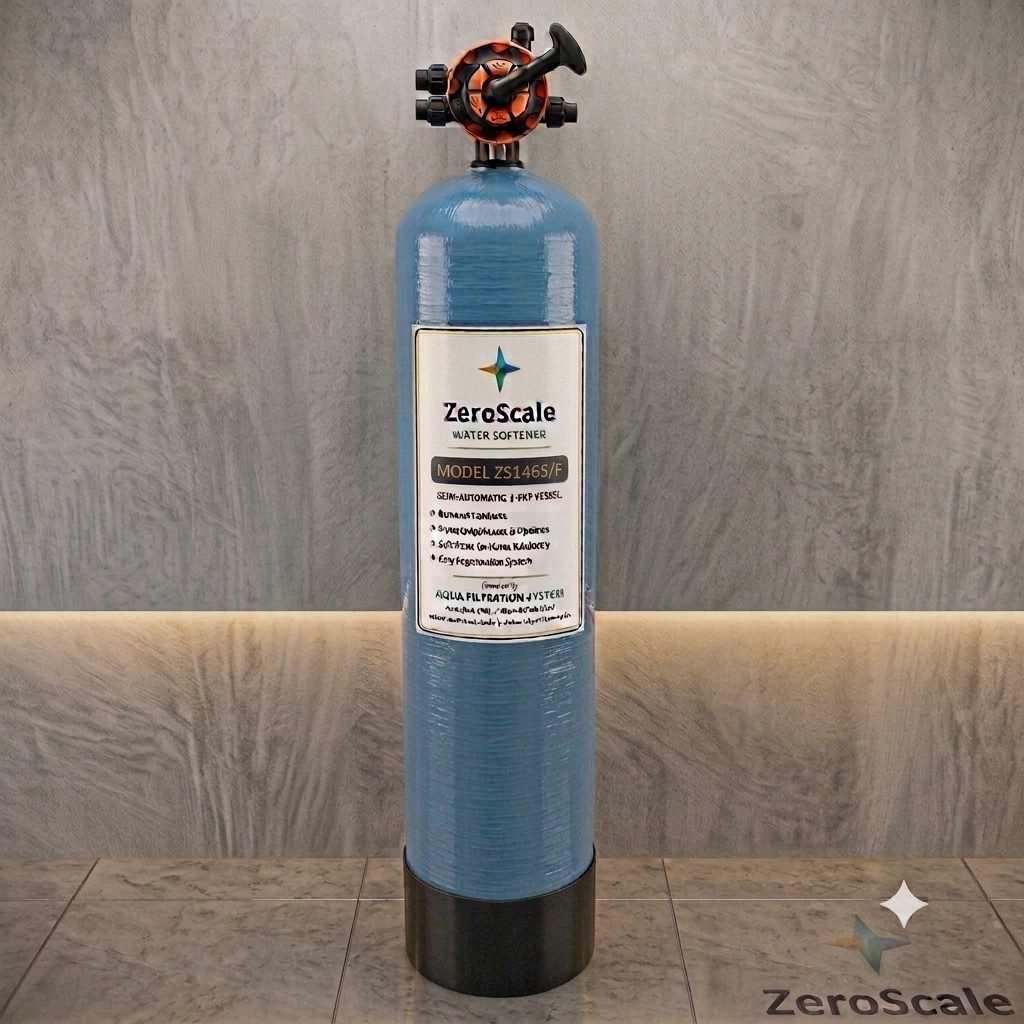
- Softener — if hardness is high
- Activated carbon filter — chlorine and organics
- SMBS dosing — remaining chlorine
- Cartridge filter 5 micron
- Antiscalant dosing
- High pressure pump
- RO membranes
Stage by stage
Screen or disc filter
Cheap, washable, and it reduces cartridge consumption substantially. See our disc vs screen guide.
Multigrade / sand filter
Needed where turbidity is above about 5 NTU. Uses an FRP vessel with a filter multiport valve. See our vessel sizing guide.
Iron removal
Iron above 0.3 ppm fouls both softener resin and membranes. It must be removed before the softener, not after.
Softener
Where hardness is high, softening ahead of the RO is more reliable than relying on antiscalant alone — particularly for boiler feed. Sizing is in our softener guide.
Activated carbon
Removes chlorine and organics. Note that carbon beds can harbour bacteria, so they need regular backwashing.
SMBS dosing
Insurance against chlorine breakthrough. Details in our SMBS guide.
Cartridge filter
The final barrier. 5 micron is standard — see our micron guide.
Antiscalant dosing
Prevents scaling inside the membrane. See our antiscalant guide.
Everything is sized on feed flow
Undersized pre-treatment chokes, pressure falls, and the plant never reaches its rated output.
The SDI test
Before finalising the design, have an SDI test done on the feed water. It measures fine particles that a turbidity meter misses and is the best predictor of membrane fouling.
- SDI below 3 — good for RO
- SDI 3 to 5 — improve pre-treatment
- SDI above 5 — membranes will foul quickly
Use an SDI kit (₹5,565). See our turbidity and SDI guide.
Instruments in the pre-treatment
- Pressure gauges before and after every filter — so you can see what is choking
- Flow meter on the feed line
- Hardness test kit after the softener, tested daily
- Chlorine test kit before the membrane
- Level switches on both dosing tanks
Where designs commonly fail
- Pre-treatment sized on plant output instead of feed flow
- Antiscalant injected before the cartridge, so the filter removes it
- No level switch on dosing tanks, so dosing stops unnoticed
- Softener before carbon, so chlorine damages the resin
- No SDI test before design, so fouling is unanticipated
- No pressure gauges, so nobody knows what is choking
Each of these is inexpensive to get right at design stage and expensive to fix afterwards.
Get your pre-treatment designed
Send your full water analysis and plant capacity, and we will design the pre-treatment train stage by stage.
💬 WhatsApp par poochhein 📞 9910646957Frequently asked questions
What determines which pre-treatment stages an RO plant needs?
The feed water analysis. Turbidity calls for media filtration, hardness for softening or antiscalant, iron for an iron removal filter, and chlorine for carbon or SMBS dosing. There is no standard package that suits all water.
Why must antiscalant be injected after the cartridge filter?
Because if it goes in before the cartridge, the filter removes the chemical. It also has to go in before the high pressure pump, or you would need an expensive high pressure dosing pump.
Should carbon filtration come before or after the softener?
Before. Chlorine attacks softener resin, so removing it first protects the resin. Iron removal should also come before the softener, since iron fouls the resin.
Should pre-treatment be sized on plant output or feed flow?
On feed flow, which is plant output divided by recovery. A plant making seven hundred and fifty LPH at sixty five percent recovery has a feed flow of about eleven hundred and fifty LPH, and every stage must handle that.
Why is an SDI test worth doing before design?
It measures fine particles that a turbidity meter misses and is the best predictor of membrane fouling. SDI below three is good for RO, while above five means membranes will foul quickly regardless of other treatment.